

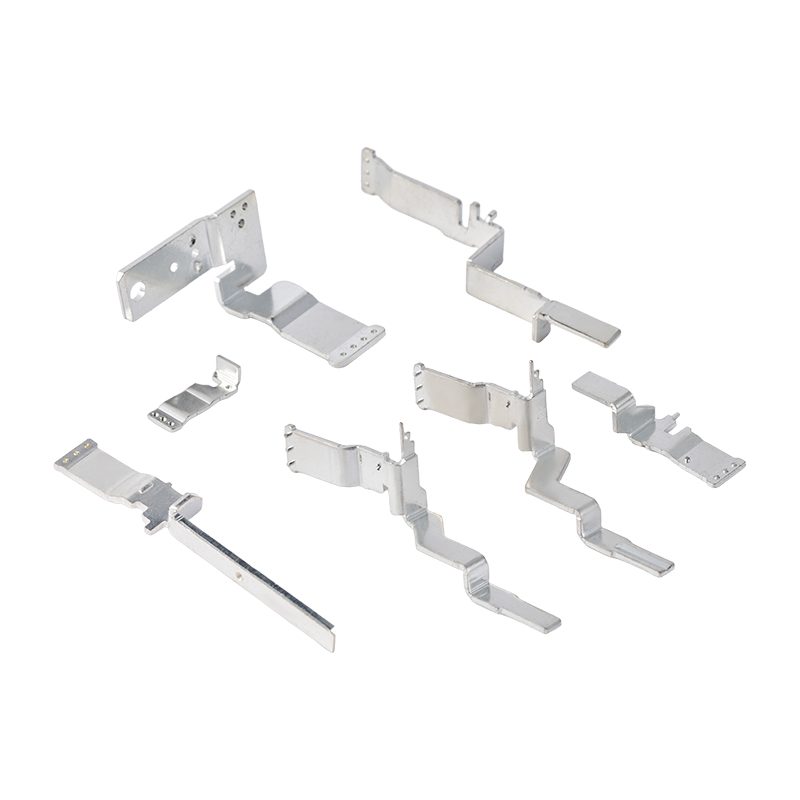
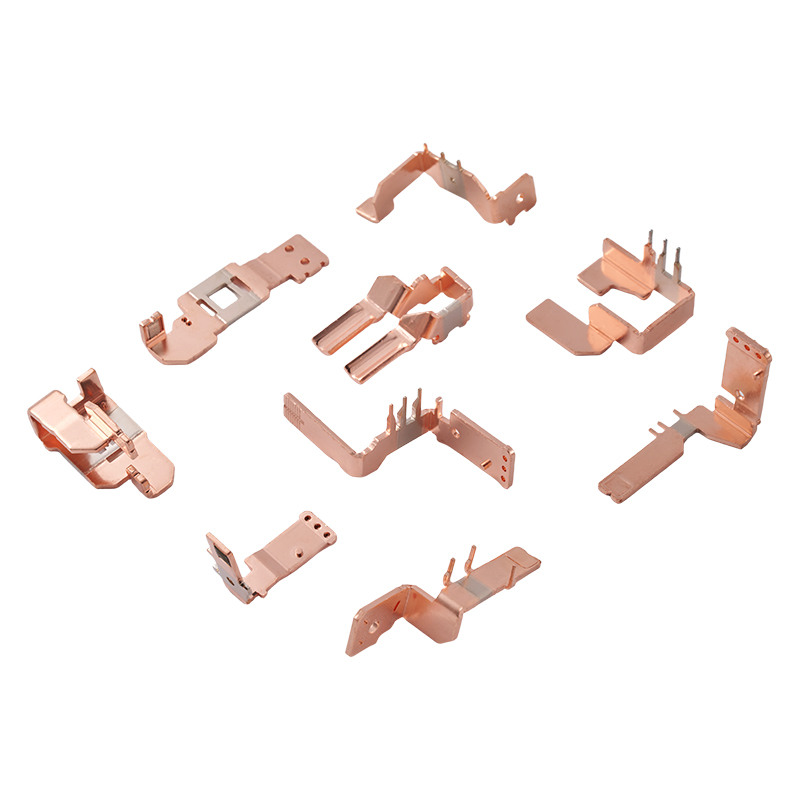
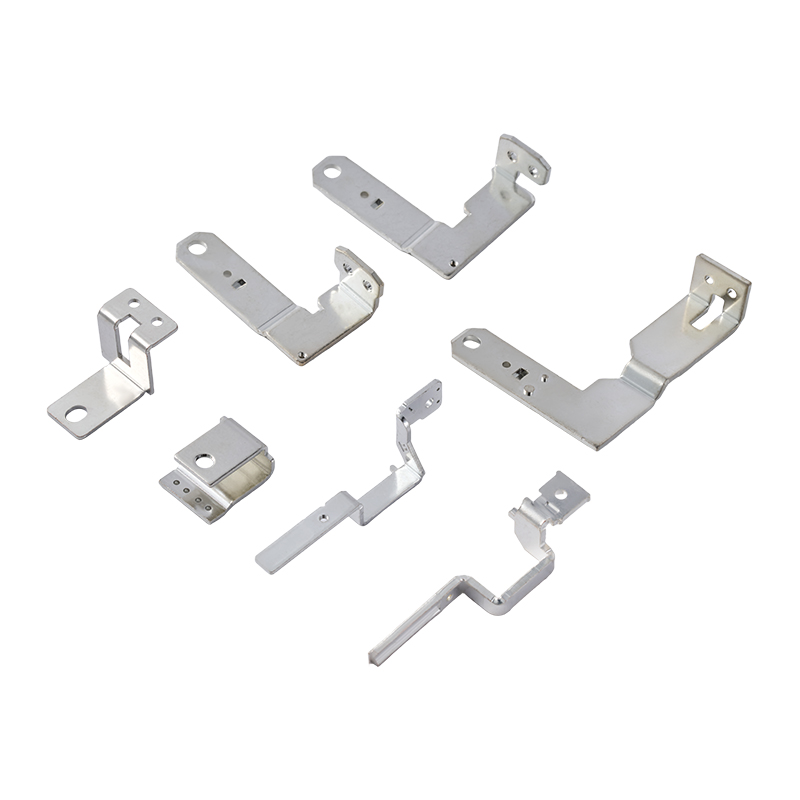
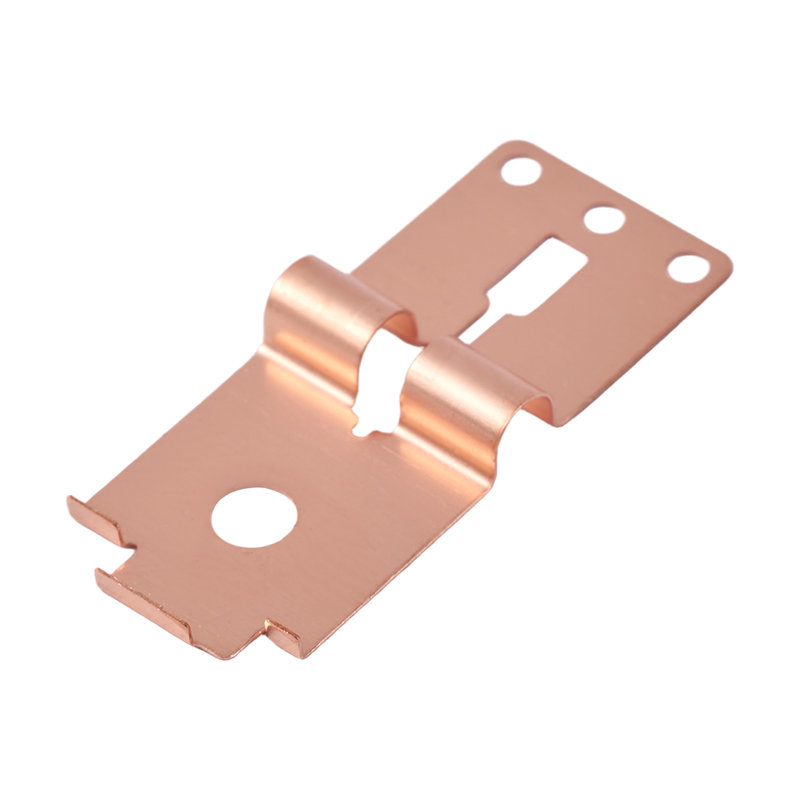
Beryllium copper movable springs are precision-engineered conductive elastic components designed for electrical switching, contact movement, and repeated signal transmission. Although compact in size, these parts play an essential role in the operating stability of power relays, industrial control switches, automotive electronic systems, new energy connectors, energy storage equipment, and other electrical assemblies. A movable spring must provide more than simple mechanical flexibility. It must maintain a controlled contact force, conduct current efficiently, withstand repeated deflection, resist deformation, and remain dimensionally consistent during large-scale production.
The Beryllium Copper Movable Spring described in this article is manufactured from high-performance copper alloy through precision stamping and aging heat treatment. This integrated production method combines accurate forming with controlled material strengthening, helping the finished spring achieve stable elastic performance, reliable electrical conductivity, and high resistance to bending fatigue. The component can also be customized in material, thickness, dimensions, spring structure, surface treatment, packaging, and production process according to customer drawings or technical specifications.
For relay and connector manufacturers, the quality of a movable spring directly affects contact reliability, switching life, electrical resistance, and overall product consistency. A spring that loses force too quickly may cause unstable contact. A part with excessive dimensional variation may create assembly difficulties. A material with inadequate conductivity may increase energy loss or signal attenuation. The use of high-quality beryllium copper, combined with automated stamping, aging treatment, and full-process inspection, addresses these requirements in one precision-manufactured component.
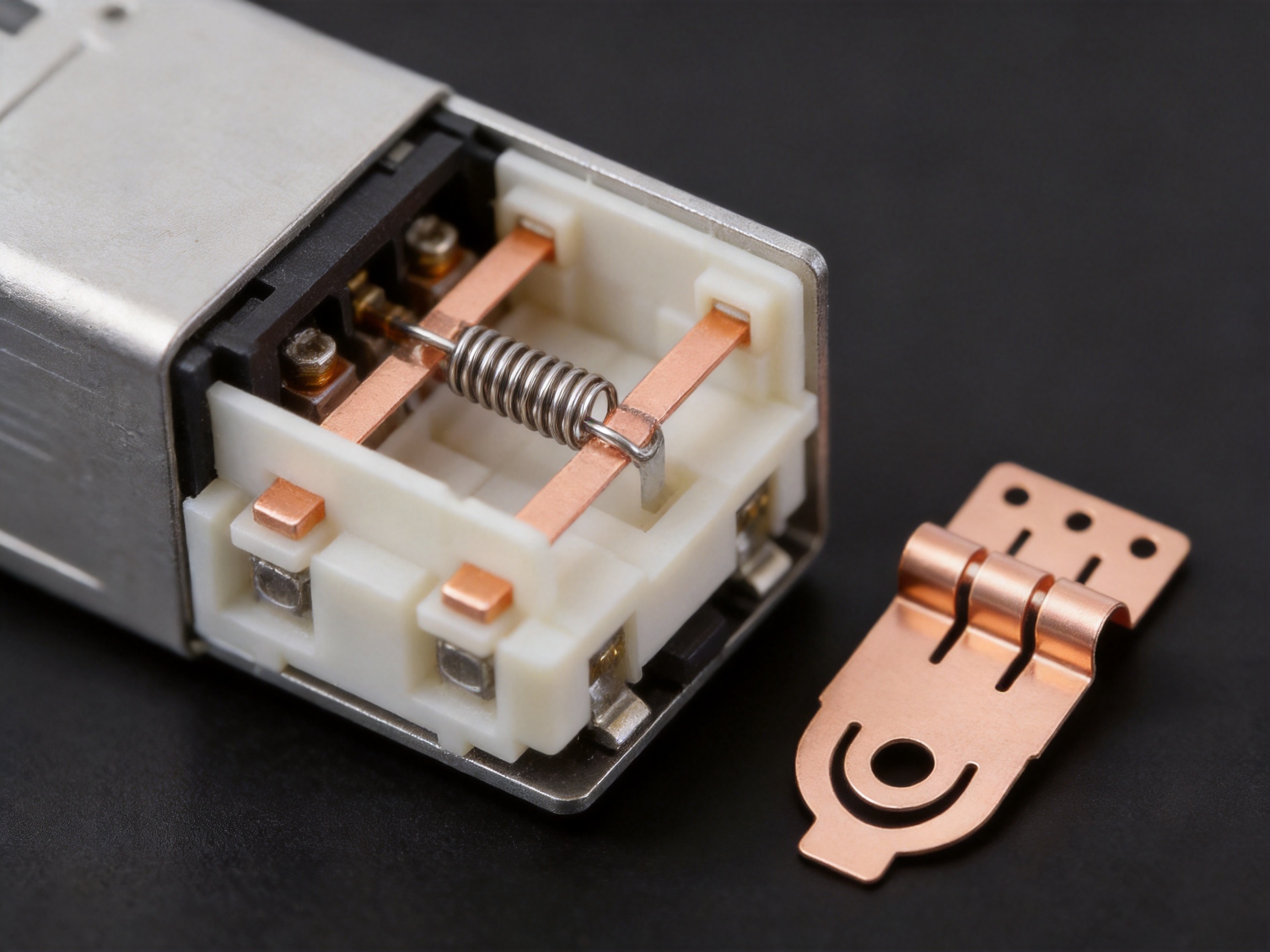
A beryllium copper movable spring is a stamped metal component that performs both mechanical and electrical functions. It is typically installed in a relay, switch, connector, or contact assembly where it moves between defined positions while maintaining electrical continuity or interrupting a circuit. During operation, the spring stores and releases mechanical energy, applies contact pressure, and supports the repeatable movement of the conductive contact system.
Beryllium copper is especially suitable for this type of component because it combines the conductivity characteristics of copper with much higher strength and resilience after appropriate heat treatment. The alloy can be formed into thin, complex, and compact geometries while retaining excellent spring performance. After stamping, aging heat treatment increases the stability of the material and helps the component retain its designed force during repeated cycling.
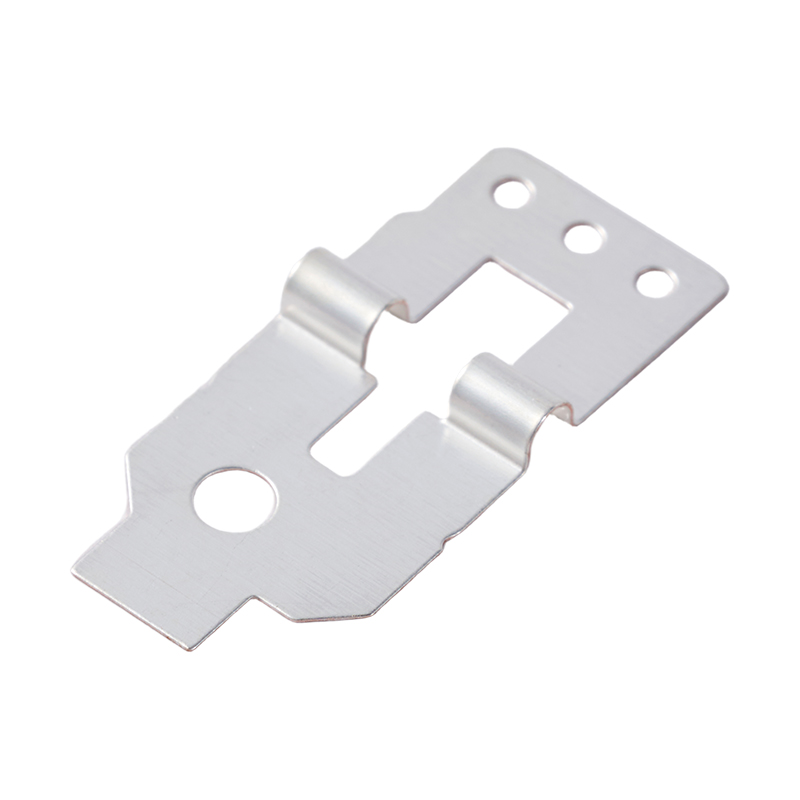
The movable spring may be designed with one or more flexible arms, contact-supporting areas, mounting features, positioning holes, bends, or formed profiles. Its exact configuration depends on the relay architecture, available installation space, rated current, switching frequency, required contact force, and expected operating life. Because these factors differ between applications, custom production based on drawings or samples is often necessary.
Compared with ordinary flat copper parts, a movable spring must satisfy much tighter mechanical requirements. Its geometry determines the relationship between displacement and force. Its material affects conductivity, elasticity, fatigue performance, and heat resistance. Its surface finish can influence contact resistance, corrosion resistance, solderability, weldability, and compatibility with other components. A suitable manufacturing process must therefore control both the shape and the material condition of the spring.
The main advantage of beryllium copper in movable spring applications is its favorable combination of strength and elasticity. After aging heat treatment, the alloy can provide stable spring force while remaining electrically conductive. This enables manufacturers to design compact components that produce the necessary contact pressure without requiring excessive material thickness or installation space.
Stable elastic strength is particularly important in relay systems. When a relay operates repeatedly, the movable spring is deflected and released many times. If the material experiences excessive permanent deformation, contact pressure may gradually decline. This can lead to intermittent conduction, increased contact resistance, switching instability, or premature component failure. A properly manufactured beryllium copper spring helps reduce these risks by maintaining its designed elastic response over repeated operation.
Beryllium copper offers reliable electrical conductivity for conductive spring applications. Although its conductivity may differ from that of pure copper, it provides a stronger balance between conductivity and mechanical performance. In a movable spring, the electrical path and the mechanical structure are often integrated into one small component. This makes it necessary to select a material that can carry current while also functioning as a durable spring.
Reliable conductivity supports stable current transmission and signal transfer. It can help reduce unnecessary electrical loss and contributes to predictable relay and connector performance. Where the application requires a specialized contact interface, additional plating or surface treatment may be applied to improve contact behavior, corrosion resistance, wear resistance, or compatibility with the mating material.
Repeated movement places cyclic stress on a spring. The component may be activated thousands, millions, or more times during its service life, depending on the equipment and operating conditions. Beryllium copper is well suited to applications requiring repeated bending because its heat-treated condition provides strong resistance to fatigue-related performance loss.
Fatigue resistance is influenced by more than material selection. Spring geometry, bend radius, stamping quality, edge condition, heat treatment, surface finish, and installation alignment all affect service performance. Precision stamping helps control the shape of the spring, while careful tooling design reduces unwanted burrs, distortion, and local stress concentration. Aging treatment further supports stable material properties.
The high strength-to-size ratio of beryllium copper allows engineers to develop compact movable springs for miniaturized relays, connectors, automotive electronic modules, and control assemblies. Smaller components can reduce overall package size, save material, and support higher component density. This is increasingly important in electric vehicles, energy storage equipment, smart meters, industrial automation systems, and portable electronic devices.
A compact spring must still deliver the required travel, contact force, and current-carrying capability. Precision forming allows designers to use carefully controlled arms, bends, slots, and mounting features to achieve the required spring behavior within a limited envelope. Custom tooling can be developed to reproduce these features consistently during mass production.
Electrical switching can produce heat and, under certain conditions, an arc at the contact interface. A suitable spring material should retain useful mechanical and electrical properties under the expected operating environment. Beryllium copper provides good resistance to the thermal and electrical stresses associated with switching applications, although the final performance also depends on the relay design, contact material, load, switching speed, voltage, current, and environmental conditions.
For applications with demanding switching duty, manufacturers may combine the beryllium copper base spring with an appropriate contact material or plating system. The surface treatment should be selected according to electrical load, contact resistance, wear requirements, corrosion exposure, soldering or welding requirements, and customer specifications.
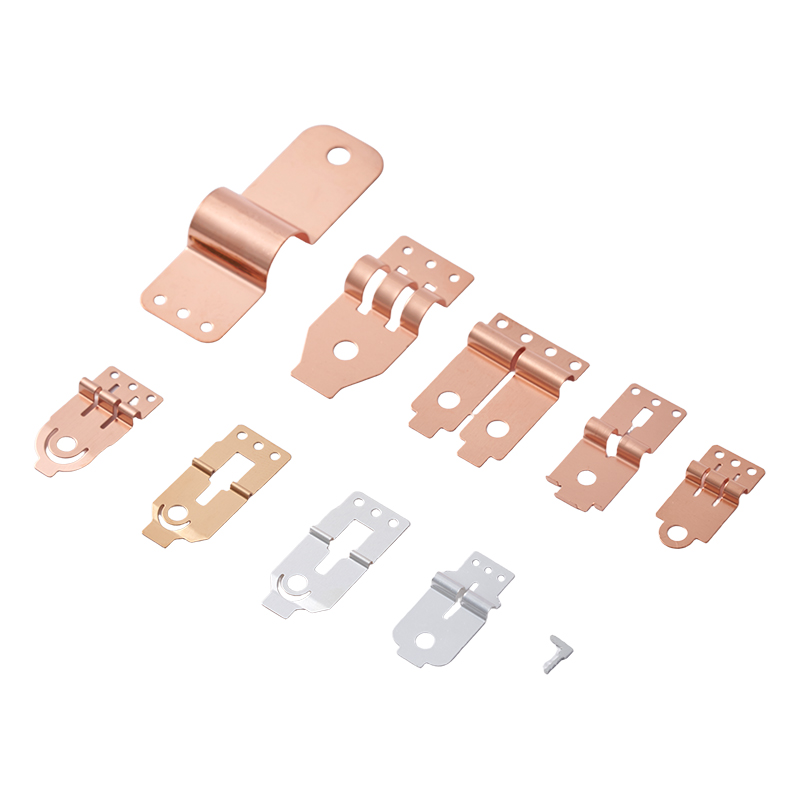
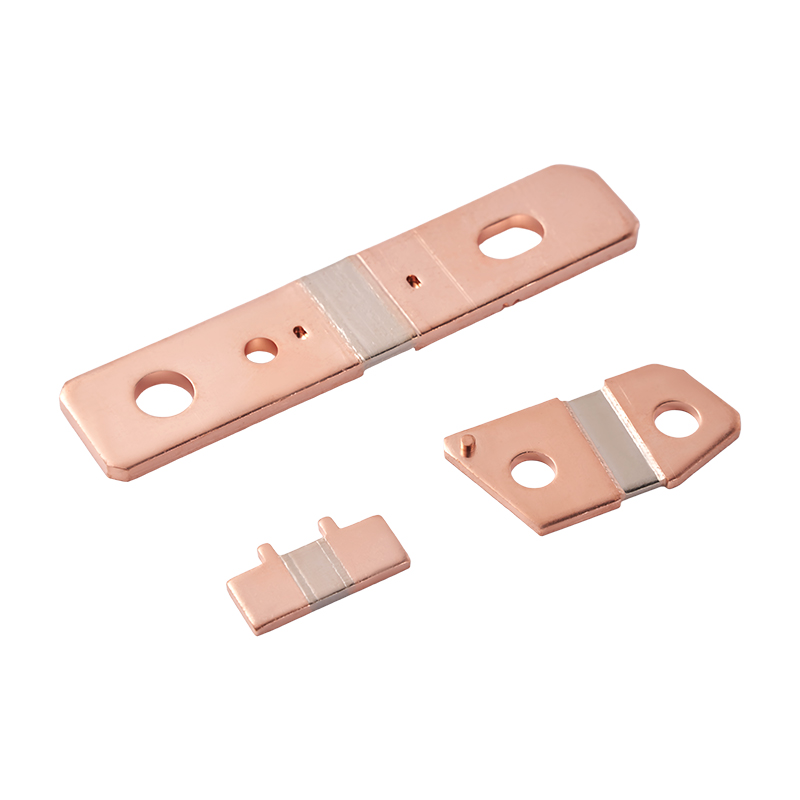
Beryllium Copper Movable Spring
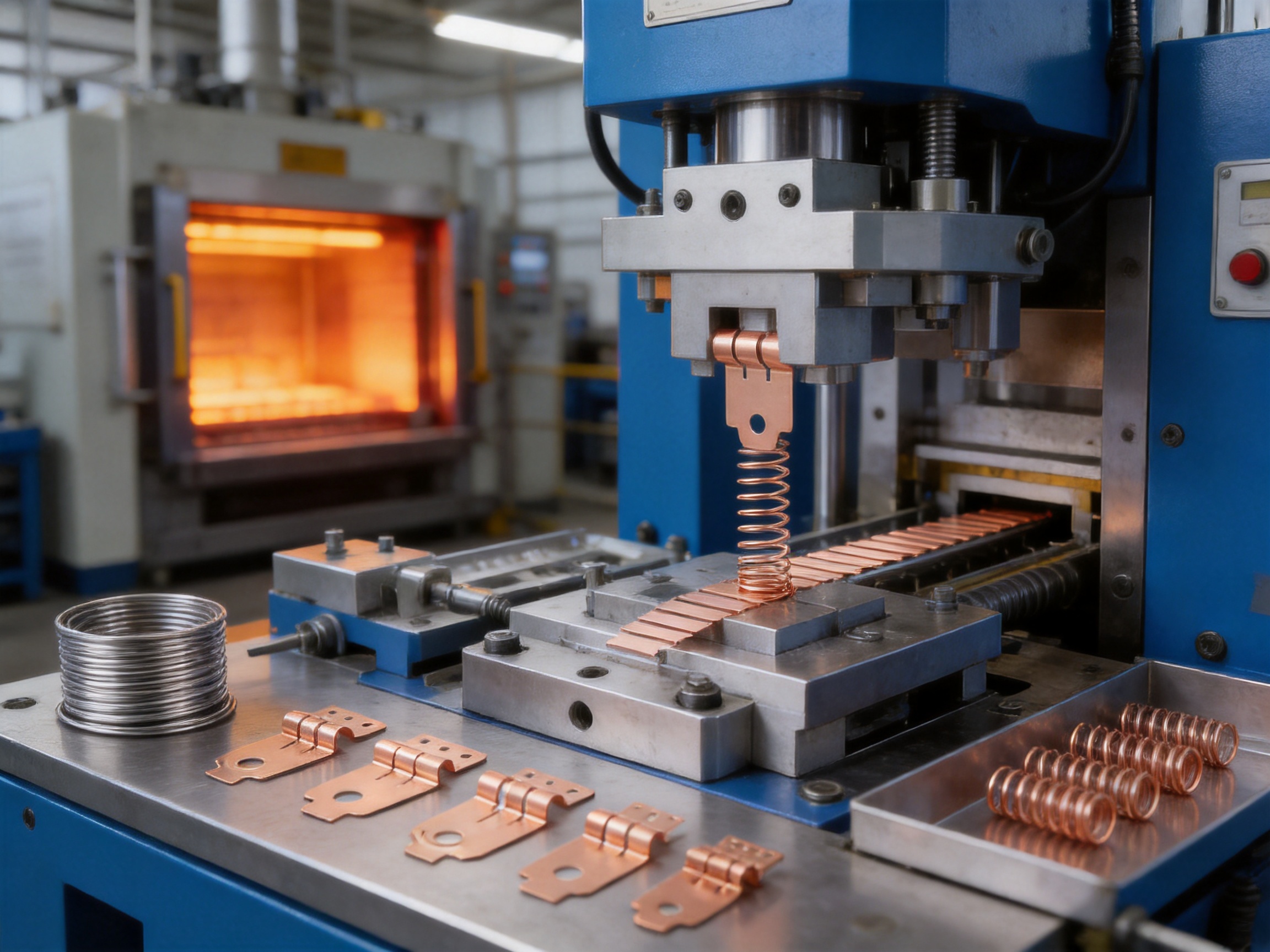
Precision stamping is the principal forming process used to produce the movable spring. During stamping, a flat metal strip or sheet is progressively cut, pierced, formed, bent, or shaped into the required configuration. For high-volume relay and connector production, stamping provides excellent repeatability, efficient material utilization, and stable production output.
The quality of the stamping die has a direct effect on the spring’s dimensional accuracy and performance. A well-designed die controls the location of holes, slots, edges, bends, and functional contact areas. It also manages the relationship between cutting and forming operations so that the finished spring retains the required geometry without excessive distortion.
For this product, the stated dimensional tolerance can reach ±0.01 mm in applicable dimensions. Such accuracy helps ensure reliable assembly and stable switching performance. Tight dimensional control is especially important for components installed in compact relay housings, where even small variations may influence contact alignment, spring travel, assembly force, or the relationship between normally open and normally closed contacts.
Automated stamping equipment can perform multiple operations in a controlled sequence. Depending on the design, these operations may include blanking, piercing, forming, bending, embossing, coining, and cut-off. Progressive tooling can move material through several stations while maintaining a consistent reference position. This approach is suitable for high-volume orders because it reduces manual handling and helps maintain repeatable part-to-part quality.
Automation also improves production efficiency. Consistent feeding, controlled press parameters, and automatic collection reduce the risk of variation caused by manual operations. Production data can be monitored to identify changes in tooling condition, material behavior, or process stability. When combined with full-process inspection, automated stamping supports reliable mass production for OEM and ODM customers.
Spring components often contain complex profiles that require specialized tooling. The die must be designed to account for material thickness, springback, bend radius, grain direction, cutting clearance, forming sequence, and expected production volume. Incorrect tooling may create cracks, deformation, burrs, dimensional drift, or uneven spring force.
Advanced tooling design begins with an evaluation of the customer’s drawing, three-dimensional model, sample, or functional requirements. Engineers can review critical dimensions, functional areas, mounting features, and possible stress concentration points before finalizing the die structure. The forming sequence is then developed to achieve the required geometry while protecting the material from excessive stress.
For custom products, tooling development may include design review, prototype production, sample inspection, customer confirmation, process adjustment, and formal production release. This process helps ensure that the spring is not only visually similar to the supplied drawing or sample but also meets the required functional performance.
Stamping creates the basic shape of the movable spring, but the material condition after forming is equally important. Aging heat treatment is used to improve the strength and elastic stability of suitable beryllium copper alloys. During this controlled thermal process, the alloy develops a stronger metallurgical structure that supports the spring’s mechanical performance.
The treatment parameters must be selected according to the alloy grade, material thickness, prior forming condition, required hardness, desired spring force, and application requirements. Temperature, time, heating uniformity, cooling conditions, and furnace control all influence the final result. Consistent treatment is therefore essential for maintaining stable quality across different production batches.
Proper aging treatment helps the spring retain its shape and contact force during repeated movement. It also supports improved resistance to permanent set and fatigue-related degradation. For relay manufacturers, this contributes to more predictable operating characteristics over the useful life of the finished electrical assembly.
Heat treatment should be integrated into the manufacturing plan rather than treated as an isolated operation. The stamping design, material selection, forming sequence, heat treatment, cleaning, surface treatment, and inspection requirements should be considered together. A component may meet a dimensional drawing immediately after stamping but still fail to provide the desired spring force if the material condition is not properly controlled.
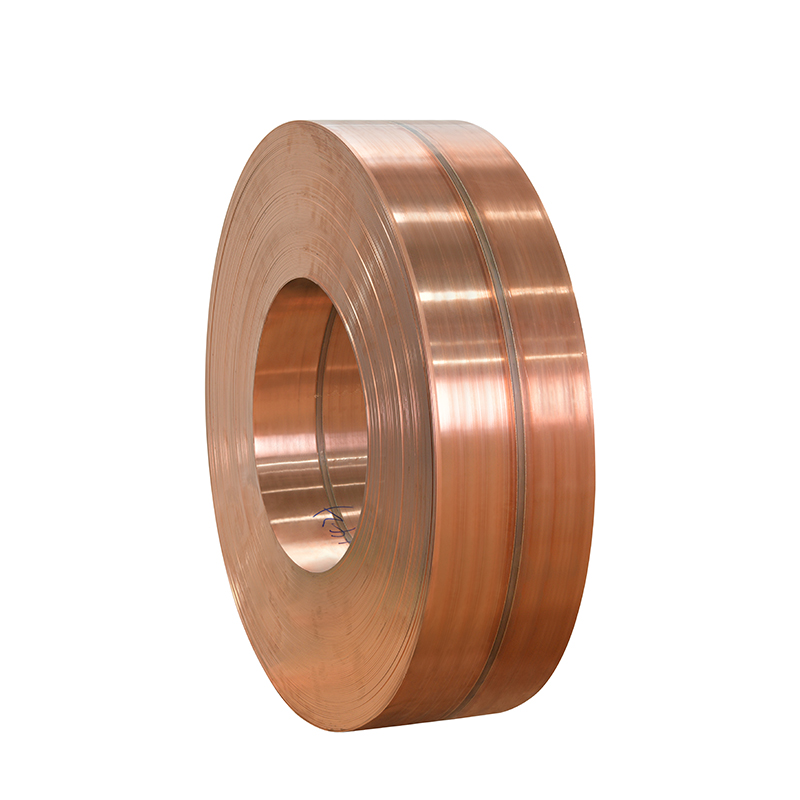
Production begins with material selection based on the required conductivity, strength, flexibility, corrosion resistance, thickness, and forming characteristics. Beryllium copper is the primary recommended material for applications requiring high elastic performance and reliable conductivity. Phosphor bronze and pure copper, including T2Y2, may also be available when the customer’s design calls for different electrical or mechanical properties.
Material certificates and incoming inspection records can be used to verify alloy grade, thickness, surface condition, and basic compliance with the approved specification. Material traceability is valuable for OEM customers because it helps connect finished products with the original coil or sheet material and supports investigation if a quality issue occurs.
Before tooling or production, the engineering team reviews the customer’s 2D drawing, 3D model, sample, or technical specification. Important factors include critical dimensions, tolerances, bend locations, hole positions, spring travel, contact force, mounting method, surface treatment, and packaging requirements.
When the design is intended for a relay or connector, the review may also consider assembly direction, clearance, contact alignment, welding areas, soldering areas, and interaction with nearby insulating or conductive components. This early review can identify manufacturing risks and suggest practical adjustments without changing the customer’s functional requirements.
After design confirmation, precision dies and auxiliary tooling are developed. Tooling materials and construction methods are selected according to the product geometry, material hardness, production volume, and required tool life. Trial stamping may be carried out to verify the forming sequence, dimensional accuracy, edge condition, and appearance of the first samples.
Tooling maintenance is also important after production begins. Cutting edges, forming surfaces, guides, and feeding elements must be monitored to prevent gradual dimensional drift. Preventive maintenance supports stable batch quality and reduces the risk of unexpected production interruption.
The selected copper alloy is fed into the stamping line and processed through the approved sequence. The operation may combine cutting, piercing, bending, shaping, and other forming steps. Automatic equipment helps maintain consistent feeding and press operation, while in-process checks verify critical dimensions and appearance.
Precision stamping provides a productive solution for large quantities of small metal components. It can achieve repeatable geometries at a lower unit cost than many slower machining methods, especially when the tooling investment is distributed across a long production run. It also supports efficient production of complex profiles that would be difficult to manufacture economically through manual forming.
After stamping, the parts undergo controlled aging heat treatment when required by the selected material and specification. The process develops the desired mechanical properties and improves spring stability. Furnace records, batch identification, and process monitoring can be maintained to support traceability and quality control.
Although precision stamping and aging are the primary processes, additional operations can be provided for specific customer requirements. Available processes may include deep drawing, laser cutting, CNC punching, threading, tapping, bending, welding, riveting, and other precision machining operations.
Secondary operations can be used to add special mounting features, modify a formed section, join multiple metal parts, or meet a particular assembly method. The appropriate process depends on the required geometry, material condition, production volume, and dimensional tolerances.
Surface treatment is selected according to the electrical, mechanical, environmental, and assembly requirements of the finished spring. Available options may include polishing, plating, nickel plating, zinc plating, anodizing, brushing, sandblasting, painting, powder coating, silkscreen printing, acid pickling, and other specified treatments.
For conductive contact components, plating selection must be made carefully. The coating may influence contact resistance, wear, corrosion protection, solderability, weldability, and compatibility with the mating contact. The customer should provide the intended electrical load and environmental conditions so that the surface treatment can be matched to the application.
Finished parts are inspected before delivery. Inspection may include dimensional verification, visual inspection, burr checking, surface condition review, material or coating confirmation, and functional testing when required. The product information specifies 100% quality control inspection before delivery, supporting consistent quality for batch orders.
Packaging is selected to prevent deformation, scratching, contamination, and mixing during transportation. For high-volume orders, customized packaging can improve counting, feeding, warehouse storage, and automated assembly. Packaging specifications may include trays, bags, cartons, separators, labels, moisture protection, and customer-defined identification systems.
When compared with ordinary copper sheet or lower-strength conductive materials, a properly heat-treated beryllium copper movable spring offers a stronger combination of elasticity, fatigue resistance, and conductivity. Pure copper may provide excellent conductivity but can be less suitable when the design requires sustained spring force and repeated deflection. Phosphor bronze can offer useful spring properties and may be selected for certain applications, but the final choice depends on the required balance between conductivity, strength, formability, and cost.
Compared with generic stamped steel springs, beryllium copper has the important advantage of being inherently conductive. A steel spring may require additional conductive features, contact attachments, or plating systems to carry current effectively. A conductive copper alloy spring can simplify the electrical path and reduce the number of separate components in some designs.
Compared with manually formed components, precision-stamped springs provide better repeatability and improved suitability for mass production. Manual forming can be appropriate for prototypes or very small quantities, but it may produce greater variation in bend angle, spring force, and dimensional position. Automated stamping with controlled tooling is more appropriate for relay and connector customers requiring stable large-scale supply.
Compared with non-heat-treated stamped copper parts, an aged beryllium copper spring is better suited to applications in which the component must preserve its elastic behavior. The heat treatment strengthens the material condition and supports more reliable performance during repeated switching. This advantage is particularly valuable when field replacement is difficult or when the spring is installed inside a sealed or compact electrical device.
Power relays require conductive and mechanically stable components that can operate under repeated switching conditions. The movable spring supports contact movement and helps maintain appropriate pressure between contact surfaces. Its geometry can be customized for the relay’s internal structure, rated current, switching mechanism, and installation space.
For power relay applications, design evaluation should include current, voltage, switching frequency, inrush conditions, contact material, arc behavior, operating temperature, and expected service life. The spring itself is one part of a complete contact system, so its specifications should be coordinated with the relay’s other components.
Industrial control switches may operate in environments with vibration, dust, temperature changes, and frequent cycling. A precision movable spring helps provide repeatable switch action and stable electrical contact. High dimensional accuracy also supports consistent assembly in control equipment produced in large volumes.
Customized surface treatments may be considered when the switch is exposed to humidity, corrosive atmospheres, contamination, or special cleaning processes. Material selection and packaging should also reflect the expected storage and operating conditions.
New energy equipment, including charging systems, power conversion equipment, battery systems, and high-voltage electrical assemblies, requires reliable conductive components. Movable springs may be used in connector mechanisms, switching units, auxiliary contact systems, and control modules.
New energy applications frequently demand compact design, high assembly consistency, and reliable performance over long service periods. A beryllium copper spring can support these requirements when its thickness, spring force, plating, and geometry are properly matched to the connector design.
Automotive electronics are exposed to vibration, thermal cycling, compact packaging, and demanding reliability requirements. Movable springs may be used in relays, switches, control modules, sensor systems, power distribution units, and other electrical assemblies.
Automotive customers may require detailed traceability, process validation, inspection records, change control, and quality-system compliance. A manufacturer with experience serving automotive and electrical industries can provide a more structured development and production process for these applications.
Signal transmission equipment depends on stable contact resistance and accurate mechanical positioning. Small variations in contact pressure, surface condition, or spring geometry may influence signal quality. A precision conductive spring with a controlled surface finish can support reliable signal continuity in communication, control, and measurement systems.
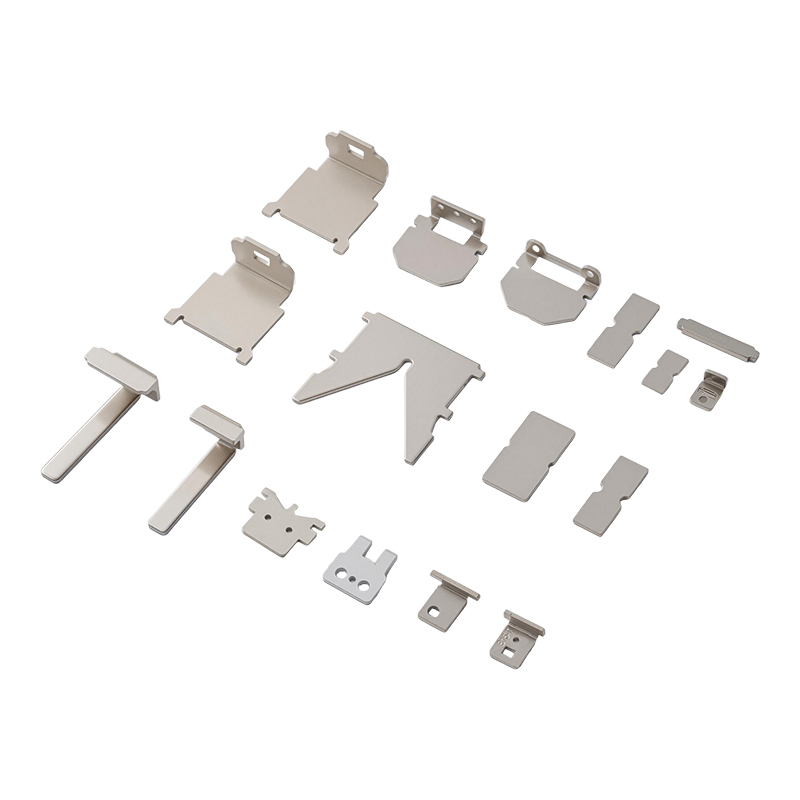
Standard catalog dimensions are not always suitable for relay and connector assemblies. The movable spring can therefore be customized according to customer drawings, physical samples, CAD files, or technical specifications. Customization may cover the alloy, thickness, width, length, bend angle, spring arm, mounting hole, contact area, surface treatment, packaging, and inspection requirements.
Material customization allows the customer to select beryllium copper, phosphor bronze, pure copper, or another approved alloy according to the required balance of conductivity, strength, spring performance, and cost. Thickness customization influences force, travel, current capacity, and available space. The spring structure can be adjusted to fit the assembly while maintaining the required functional movement.
Surface treatment customization is also important. Some customers may require nickel plating for wear or corrosion protection, while others may need a different coating for soldering, welding, low contact resistance, or environmental compatibility. The coating thickness and treatment sequence should be defined clearly because they can affect final dimensions and contact performance.
OEM and ODM support allows the supplier to manufacture according to customer drawings or develop a component from an initial sample and application requirement. Engineering support may include drawing review, manufacturability analysis, tooling design, prototype sampling, dimensional reports, process recommendations, and production optimization.
Customized packaging is available for bulk orders. Packaging can be designed to protect fragile spring arms, maintain part orientation, simplify counting, and support automated assembly. Proper packaging is particularly important for thin stamped parts because careless stacking or excessive compression can cause deformation before the components reach the customer.
A reliable movable spring supplier must control more than the final inspection stage. Quality begins with material purchasing and continues through tooling, stamping, heat treatment, surface treatment, inspection, packaging, and shipment. Full-process control helps identify potential variation earlier and reduces the risk of large quantities of nonconforming parts.
The manufacturer described in the supplied information has obtained ISO 9001, ISO 45001, ISO 14001, and IATF 16949 certifications. These systems represent structured approaches to quality management, occupational health and safety, environmental management, and automotive quality requirements. Certification alone does not replace product-specific control, but it demonstrates the presence of formal management systems supporting production activities.
The company also reports compliance-related testing such as RoHS and REACH. These requirements are important for electrical and electronic components supplied to international customers. Material declarations, restricted-substance controls, and supporting test documentation may be requested during supplier qualification or project approval.
Automated stamping, aging heat treatment, and automatic inspection provide a foundation for stable mass production. A manufacturing system with sufficient capacity can support both standard recurring orders and customized OEM projects. Complete inspection reports can help customers verify dimensions, materials, surface conditions, and other agreed requirements before shipment.
Experience in relays, current transformers, electricity meters, new energy, energy storage, automotive parts, and electronic and electrical products also supports application understanding. These industries often require close coordination between the component supplier and the customer’s engineering, purchasing, quality, and production teams.
The manufacturer has operated since 2010 and provides hardware supporting products and solutions for electronic and electrical applications. Its reported strengths include mold and tooling design, in-process quality control, manufacturing capacity, technical development, and after-sales service. These capabilities are relevant to movable spring production because the component’s performance depends on coordinated control of material, tooling, forming, treatment, inspection, and delivery.
Item |
Specification |
Product name |
Beryllium Copper Movable Spring |
Primary application |
Relay and electrical contact systems |
Available materials |
Beryllium copper, phosphor bronze, and pure copper T2Y2 |
Dimensional tolerance |
Up to ±0.01 mm, subject to drawing and feature requirements |
Primary manufacturing process |
Precision stamping and aging heat treatment |
Additional processing |
Deep drawing, laser cutting, CNC punching, bending, threading, welding, tapping, and riveting |
Surface treatment options |
Polishing, plating, nickel plating, zinc plating, brushing, painting, powder coating, anodizing, sandblasting, acid pickling, and related treatments |
Drawing formats |
3D, CAD, DWG, IGS, and STP |
Inspection |
100% quality inspection before delivery |
Minimum order quantity |
1,000 pieces |
Regular lead time |
Approximately 6–8 weeks |
Customized product lead time |
Approximately 5–9 weeks after receipt of payment, subject to project complexity |
Trade terms |
EXW or CIF |
Selection should begin with the electrical and mechanical requirements of the complete assembly. The customer should identify the rated voltage, current, switching frequency, contact configuration, expected service life, operating temperature, environmental exposure, available space, and assembly method. These factors influence material, thickness, spring structure, surface treatment, and inspection criteria.
The required spring force and travel should be defined clearly. A spring that is too soft may not provide adequate contact pressure, while a spring that is too stiff may increase actuator load or cause excessive wear. The desired force-displacement curve can help the manufacturer design a suitable geometry and select an appropriate material thickness.
Contact resistance and current-carrying requirements should also be considered. The conductive path may include the spring body, a welded contact, a plated area, or a separate contact rivet. Surface treatment should be selected based on the electrical load and the mating contact material rather than chosen solely for appearance.
Environmental requirements include temperature, humidity, salt exposure, vibration, dust, chemical exposure, and storage conditions. Automotive, energy storage, and industrial customers may require specific validation tests to confirm that the spring maintains its dimensions, force, conductivity, and surface condition after environmental cycling.
Finally, the customer should define documentation needs. These may include material certificates, dimensional inspection reports, heat treatment records, coating reports, RoHS or REACH declarations, first article inspection documents, capability studies, and packaging approval records. Early agreement on documentation prevents delays during supplier qualification and production release.
The main purpose is to provide controlled mechanical movement, stable contact force, and reliable electrical conduction in relays, switches, connectors, automotive electronic systems, and signal transmission equipment. It performs both spring and conductive functions within the electrical assembly.
Beryllium copper offers a more balanced combination of conductivity, elastic strength, fatigue resistance, and dimensional stability. Ordinary copper may provide higher conductivity, but it may not maintain the required spring force as effectively under repeated deflection. The final selection should be based on the complete application requirements.
Yes. Phosphor bronze and pure copper T2Y2 are available for applications requiring different electrical, mechanical, forming, or cost characteristics. The material should be selected according to the required conductivity, elasticity, thickness, spring force, operating environment, and surface treatment.
Yes. OEM and ODM production can be based on 2D drawings, three-dimensional models, CAD files, physical samples, or technical specifications. The engineering team can review the design, recommend manufacturing details, develop tooling, produce samples, and proceed with mass production after approval.
The product information specifies a tolerance of up to ±0.01 mm for applicable dimensions. Actual achievable tolerance depends on the feature, material thickness, geometry, tooling design, surface treatment, and inspection method. Critical dimensions should be identified clearly on the customer drawing.
The primary processes are precision stamping and aging heat treatment. Additional processes may include deep drawing, laser cutting, CNC punching, bending, threading, welding, tapping, and riveting. The exact process route is determined by the product design and required performance.
Yes. Available treatments may include polishing, plating, nickel plating, zinc plating, anodizing, powder coating, brushing, silkscreen printing, sandblasting, painting, hot-dip galvanizing, and acid pickling. Conductive contact areas should receive a treatment selected for the required electrical and environmental performance.
Stock samples are available where applicable. OEM and ODM samples can also be produced according to customer drawings or physical samples. Sample approval is recommended for customized springs before the production tooling and mass production schedule are finalized.
The stated minimum order quantity is 1,000 pieces. The practical production quantity may depend on tooling, material purchasing, surface treatment, packaging, and the customer’s customization requirements.
Regular orders generally require approximately 6–8 weeks. Customized products generally require approximately 5–9 weeks after receipt of payment, depending on design review, tooling development, sample approval, material availability, surface treatment, inspection, and order quantity.
The product information states that 100% quality inspection is performed before delivery. Inspection may include dimensions, appearance, burrs, surface condition, material, coating, and other customer-defined requirements. Inspection reports and additional quality documents can be discussed during project development.
A quotation request should include the drawing or sample, material preference, thickness, critical dimensions, annual or order quantity, surface treatment, application, required spring force, electrical load, packaging requirements, inspection requirements, delivery destination, and preferred trade terms. More complete information enables a more accurate technical and commercial quotation.
A typical project begins with the customer sending a drawing, sample, or application description. The engineering team reviews manufacturability, identifies critical dimensions, confirms the material and surface treatment, and evaluates whether existing tooling can be used or new tooling must be developed.
After technical clarification, the supplier provides a quotation and preliminary lead time. If the project proceeds, tooling design and sample production are arranged. The customer reviews the sample dimensions, appearance, spring behavior, and assembly performance. Any necessary modifications are recorded before formal approval.
Mass production then follows the approved specifications and quality plan. Material batches, stamping operations, heat treatment, surface treatment, inspection, and packaging are controlled according to the agreed process. Before shipment, the finished products are checked and prepared under the selected trade terms, such as EXW or CIF.
For regular orders, the payment terms may be 100% T/T, with sample orders requiring full payment. For bulk orders, the stated arrangement is 50% T/T advance payment and the balance before delivery. Final commercial terms should be confirmed in the formal quotation or sales contract.
The Beryllium Copper Movable Spring is a high-value precision component for electrical systems that require reliable switching, stable contact force, and repeated mechanical operation. Its combination of elastic performance, electrical conductivity, fatigue resistance, compact design potential, and heat-treated stability makes it suitable for power relays, industrial switches, new energy connectors, automotive electronics, energy storage systems, and signal transmission equipment.
Its advantages are supported by an integrated manufacturing process that includes material selection, precision tooling, automated stamping, aging heat treatment, optional secondary processing, surface treatment, and full-process inspection. Dimensional accuracy up to ±0.01 mm, customized OEM and ODM production, multiple material options, and flexible packaging support the requirements of demanding industrial customers.
The manufacturer’s experience in electronic and electrical hardware, relay components, current transformers, energy-related products, and automotive applications provides a practical foundation for customized spring development. Certifications including ISO 9001, ISO 45001, ISO 14001, and IATF 16949, together with reported RoHS and REACH testing, further support structured production and international customer requirements.
For the best result, customers should define the spring’s electrical load, required force, travel, service life, operating environment, dimensional tolerances, surface treatment, and inspection documentation at the beginning of the project. With these requirements clearly established, a precision beryllium copper movable spring can be developed to provide reliable performance throughout the life of the relay, connector, switch, or electrical system.
1. Copper Development Association, Copper and Copper Alloy Applications in Electrical and Electronic Components.
2. ASTM International, Standard Specifications and Test Methods for Copper and Copper-Alloy Products.
3. International Organization for Standardization, ISO 9001 Quality Management Systems.
4. International Organization for Standardization, ISO 14001 Environmental Management Systems.
5. International Organization for Standardization, ISO 45001 Occupational Health and Safety Management Systems.
6. International Automotive Task Force, IATF 16949 Quality Management System Requirements for Automotive Production and Relevant Service Parts.
7. European Union, Restriction of Hazardous Substances Requirements for Electrical and Electronic Equipment.
8. European Union, Registration, Evaluation, Authorisation and Restriction of Chemicals Requirements.
9. Engineering references on spring design, fatigue behavior, contact force, and copper alloy heat treatment.





 English
 русский
 Français
 日本語
 Español
 Deutsch
 عربى
 Indonesia
 +86-18257772883