
Smart electricity meters are becoming increasingly important as utilities, industrial users, building operators, and energy service providers seek more accurate, connected, and reliable methods of measuring electrical consumption. Behind the digital display, communication module, and intelligent control functions of every meter is a group of small but highly important components responsible for current measurement, electrical conduction, circuit switching, and signal transmission. These internal parts must maintain stable performance over long operating periods while tolerating electrical stress, temperature variation, repeated switching, vibration, and demanding production requirements.
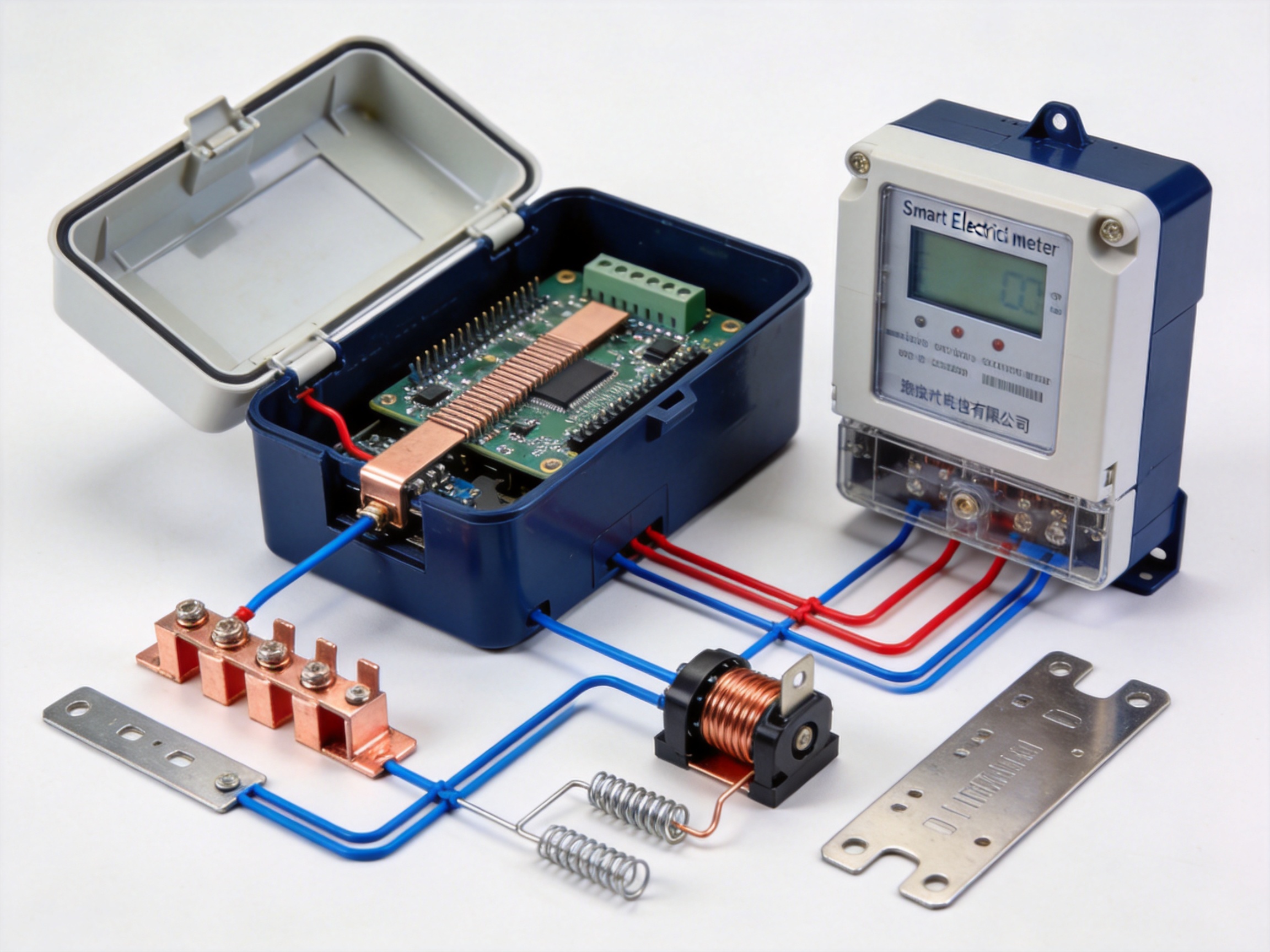
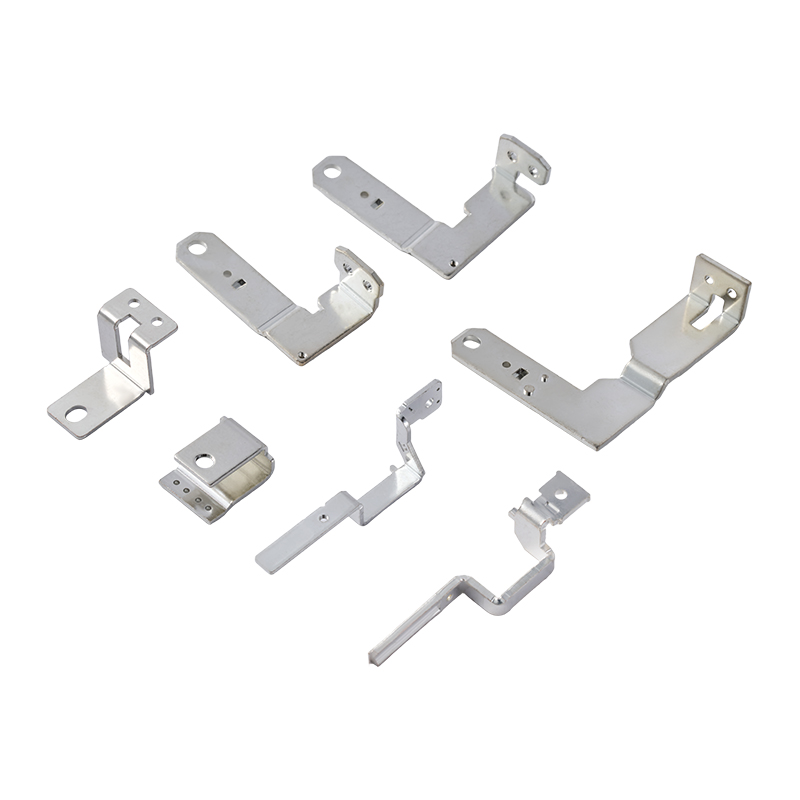
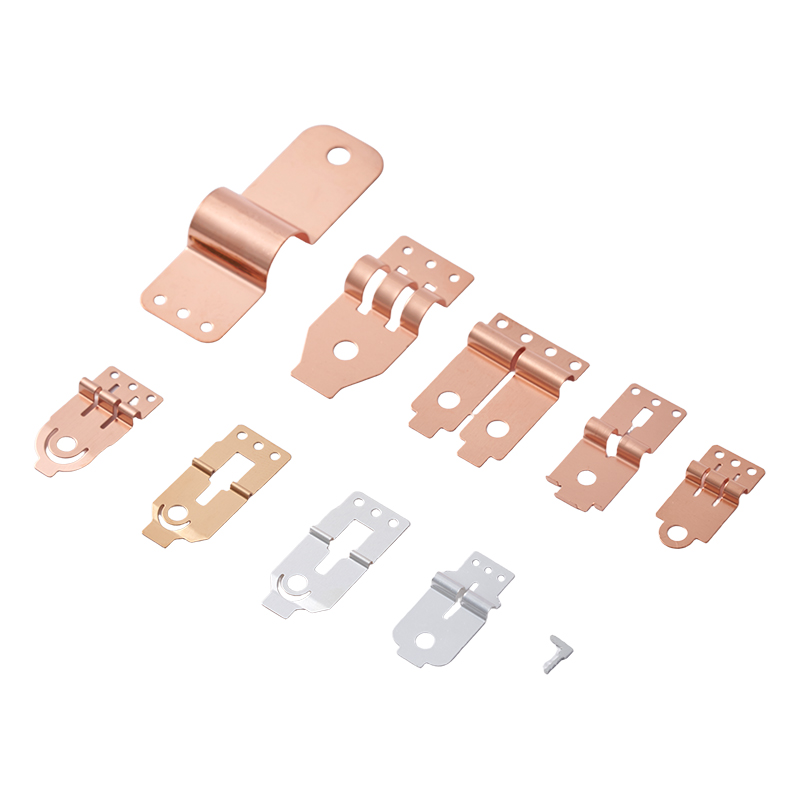
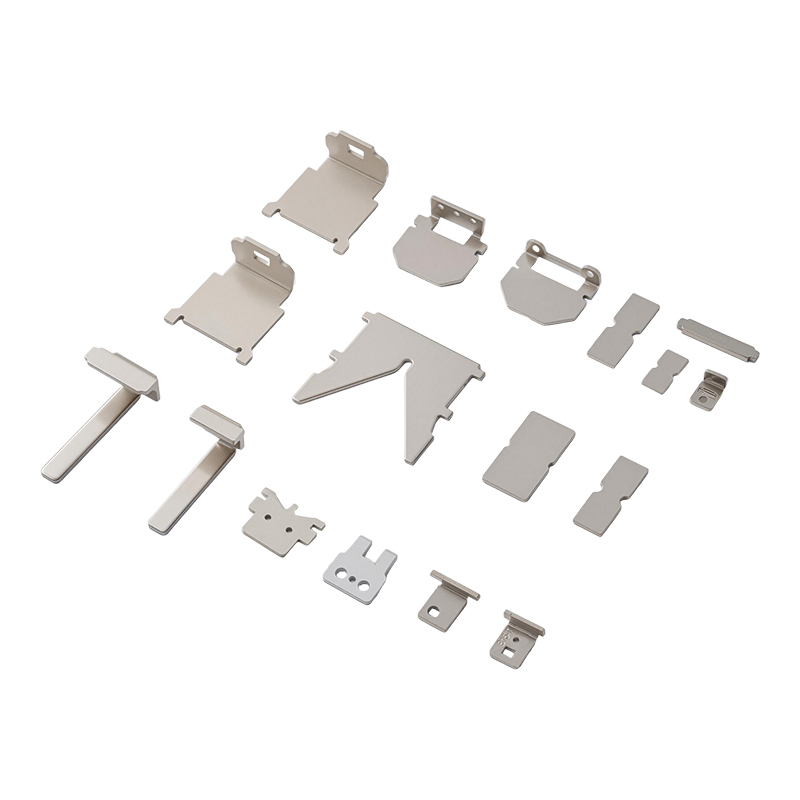
Smart Meter Components are precision conductive, sensing, and switching parts designed for use inside smart electricity meters and related electrical measurement equipment. The product range includes manganin shunt strips, relay moving and stationary contact strips, precision contact springs, magnetic sensing components, conductive terminals, and other customized stamped or welded parts. These components are manufactured through processes such as vacuum electron beam welding, precision stamping, automated assembly, controlled surface finishing, and strict dimensional inspection.
The performance of these components directly influences meter accuracy, switching reliability, service life, assembly efficiency, and overall product consistency. A small variation in resistance, contact pressure, alignment, plating thickness, or dimensional tolerance can affect the finished meter. For this reason, component suppliers must provide more than individual metal parts. They must offer controlled materials, stable production processes, traceable inspection, engineering support, and the ability to customize components for different meter platforms.
With experience in hardware supporting products for electrical and electronic applications, Zhejiang Taoyang Electronics Co., Ltd. supplies customized components for smart metering, relays, current transformers, energy storage, new energy, automotive, and other industries. Its manufacturing capabilities combine tooling development, precision stamping, vacuum electron beam welding, automated production, and quality management. This integrated approach enables customers to simplify procurement while maintaining consistent performance across large production batches.
A smart meter is a complete measurement and communication system rather than a simple mechanical counter. It may include a current sensor, voltage sensing circuit, microprocessor, display, communication module, relay, protective housing, power supply, and data storage function. Each subsystem depends on carefully designed internal hardware to perform correctly.
Current-sensing components measure the electrical current flowing through the meter. The measured signal is then processed by the electronic circuit to calculate power consumption, demand, and other energy parameters. Switching components control the connection or disconnection of a load, allowing the utility or energy management system to perform remote operations. Conductive terminals and stamped parts carry current between internal circuits while maintaining low resistance and mechanical stability.
Because these parts are installed inside compact meter housings, they must meet strict requirements for size, shape, electrical performance, heat management, and assembly compatibility. A component that performs well in a laboratory but varies significantly during mass production can create manufacturing problems for the meter manufacturer. Therefore, smart meter component design must consider both technical performance and industrial manufacturability.
Accurate current sampling is fundamental to the operation of a smart meter. Manganin shunt strips and similar precision resistance components create a known voltage drop when current passes through them. The electronic measuring circuit detects this voltage and converts it into a current value. Since the shunt resistance is carefully controlled, the meter can calculate energy consumption with a high level of repeatability.
For this function, the resistance value must remain stable over temperature, time, and load conditions. Excessive temperature drift can produce measurement errors, particularly in meters installed outdoors or in locations exposed to fluctuating ambient conditions. High-quality manganin components provide stable resistance characteristics and low temperature coefficients, helping the meter maintain measurement accuracy across a broad operating range.
Many smart meters include a relay that controls the connection between the utility supply and the user load. The relay may operate during remote connection, disconnection, overload management, prepaid metering, demand response, or safety control. The relay moving contact strip and stationary contact strip must close reliably, carry the required current, and open safely when switching is required.
Contact components are exposed to electrical arcing, contact bounce, mechanical impact, and repeated thermal stress. Poorly designed contacts may develop excessive resistance, welding, pitting, or unstable contact pressure. Precision stamping and suitable surface treatment help create contact strips with accurate geometry, smooth movement, and dependable electrical performance.
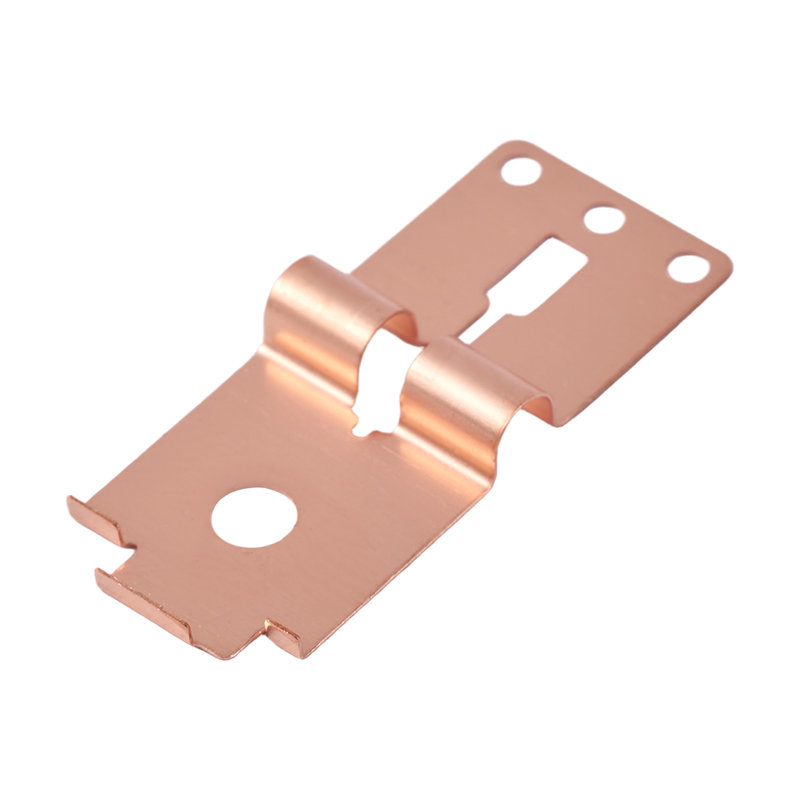
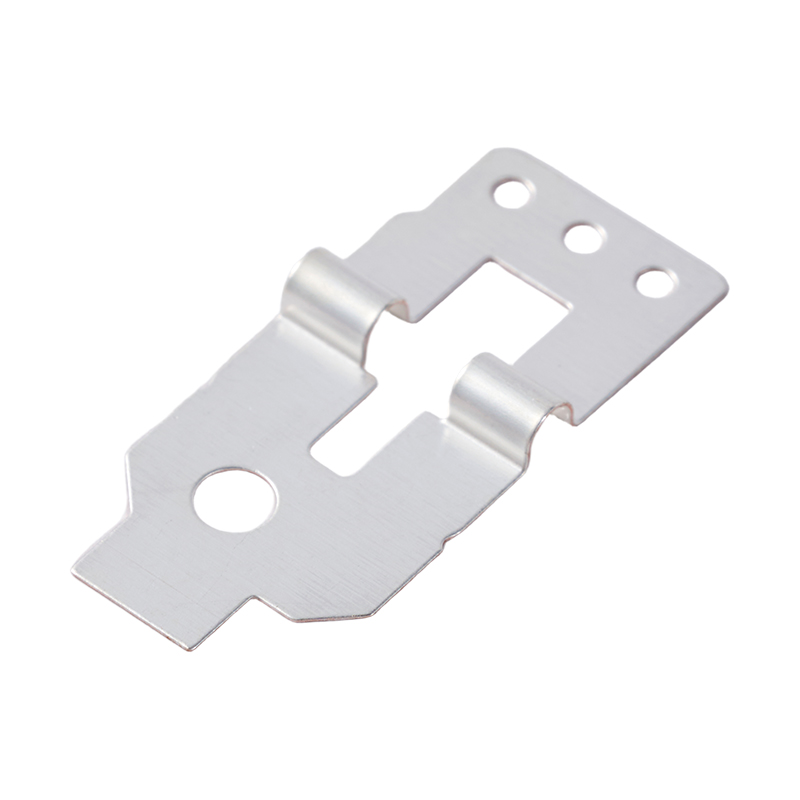
Contact springs, terminals, magnetic cores, and supporting stamped parts contribute to the mechanical and electrical integrity of the meter. Contact springs provide controlled pressure and compensate for small assembly variations. Magnetic components used in current sensors support signal transmission and measurement linearity. Terminals and conductive brackets establish secure electrical paths between the meter’s internal modules.
Although these parts may be small, their dimensional accuracy is important. Misalignment can increase contact resistance, prevent smooth relay operation, or interfere with automated assembly. Consistent production is therefore essential for both the finished product and the customer’s manufacturing efficiency.
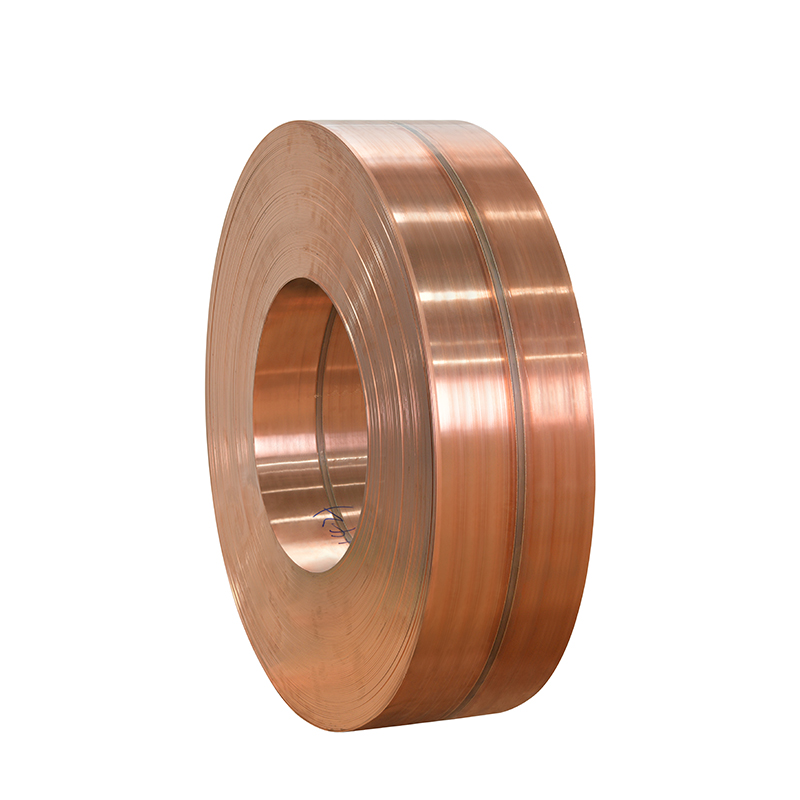
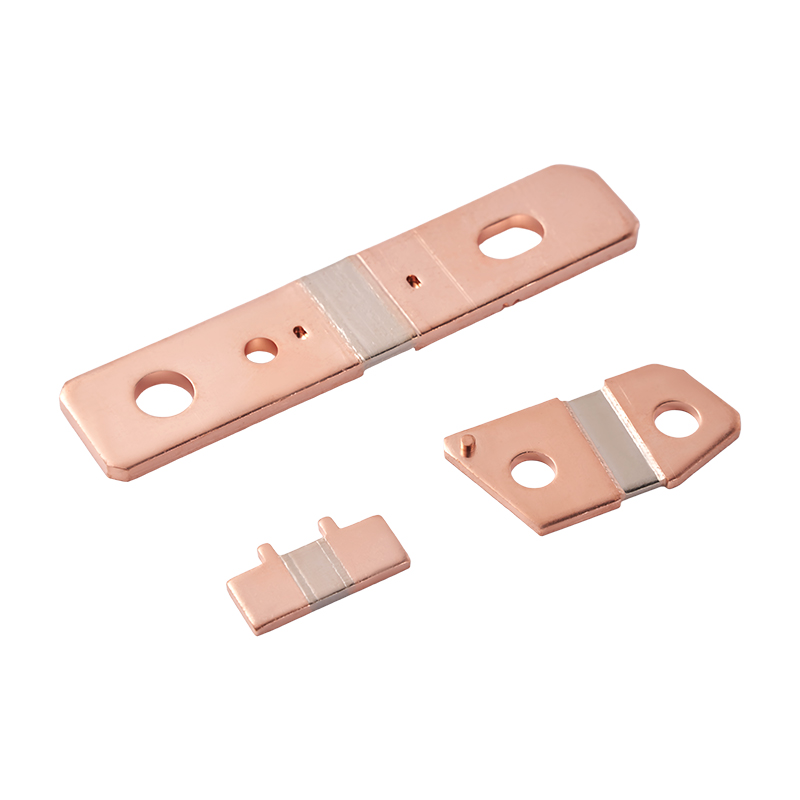
Manganin shunt strips are precision current-sensing components manufactured from resistance alloy materials. They are used to create a predictable voltage signal that corresponds to the current passing through the meter. The dimensions, resistance value, welding position, and terminal configuration can be customized to match the customer’s electrical design.
The key advantages of manganin shunt components include stable resistance, low temperature drift, reliable current distribution, and compatibility with compact meter structures. Their design can be adapted for different rated currents and installation methods. In addition to smart electricity meters, shunt components may be used in digital power meters, battery systems, energy storage equipment, power supplies, and industrial monitoring devices.
For high-volume meter production, repeatability is just as important as nominal electrical accuracy. Each shunt must have consistent resistance and geometry so that the meter manufacturer does not need to make extensive calibration adjustments from batch to batch. Automated production and inspection help control these variables.
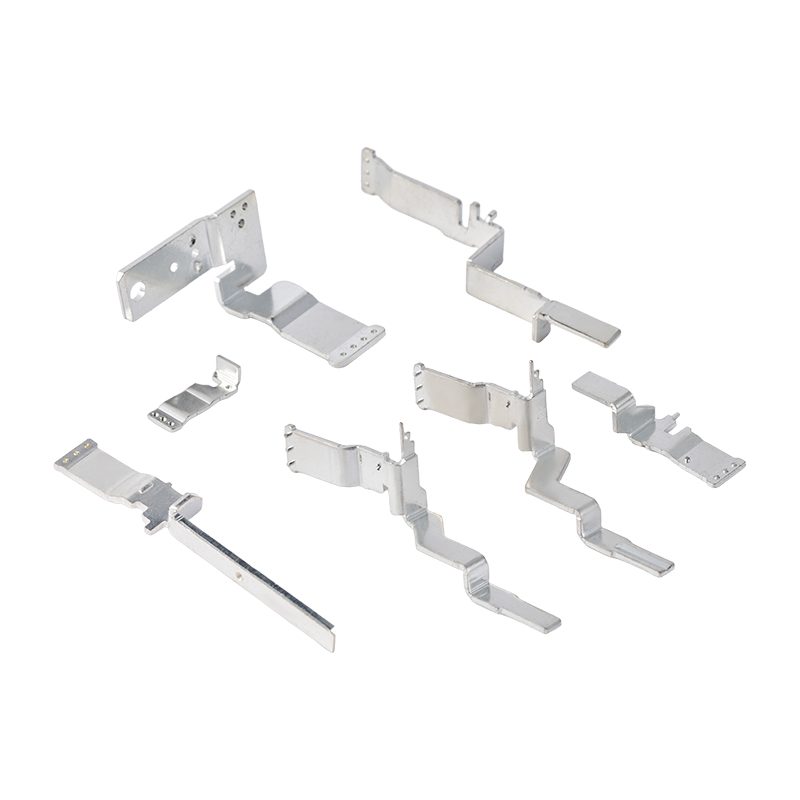
The moving contact strip is the relay element that travels during switching. It must combine electrical conductivity with suitable elasticity and mechanical strength. Its shape determines the movement path, contact pressure, and interaction with the relay armature or actuator.
A precision moving contact strip supports smooth switching and helps reduce contact bounce. Its spring characteristics must remain stable after repeated operation. The component may also require a specialized coating or contact material depending on the rated load, switching frequency, and environmental conditions.
Through precision stamping, the strip can be formed with controlled bends, mounting features, holes, and contact locations. The production tooling is designed to protect the functional areas of the component while maintaining repeatable dimensions at scale.
The stationary contact strip provides the fixed electrical contact point for the relay. Its position must be controlled accurately relative to the moving contact. Even a small deviation can affect contact pressure, switching resistance, or arc behavior.
Stationary contact strips can be produced with integrated terminals, mounting areas, and contact surfaces. Depending on the application, the contact region may be welded, plated, or otherwise treated to improve conductivity and arc resistance. A correctly designed stationary strip helps extend relay life and maintain stable electrical performance throughout repeated operation.
Precision contact springs maintain pressure between conductive surfaces and compensate for dimensional variation within the assembly. They are commonly used in relays, meter terminals, sensor assemblies, and other electrical mechanisms.
Spring design includes material selection, thickness, free height, working displacement, contact force, fatigue behavior, and forming accuracy. A spring that is too weak may cause unstable contact, while a spring that is too strong may increase mechanical wear or interfere with relay operation. Controlled stamping and forming are necessary to achieve the required force characteristics.
Some smart meter platforms use magnetic sensing structures to measure current or transmit a measurement signal. High-permeability magnetic cores can support good linearity and high measurement accuracy when correctly designed with the associated coil, circuit, and housing.
Magnetic components may be supplied in PCB-mountable formats to simplify automated assembly. Their dimensions, mounting features, insulation structure, and terminal configuration can be adapted to the meter’s circuit board and enclosure. Stable manufacturing is important because changes in core position or winding-related geometry can affect sensor performance.
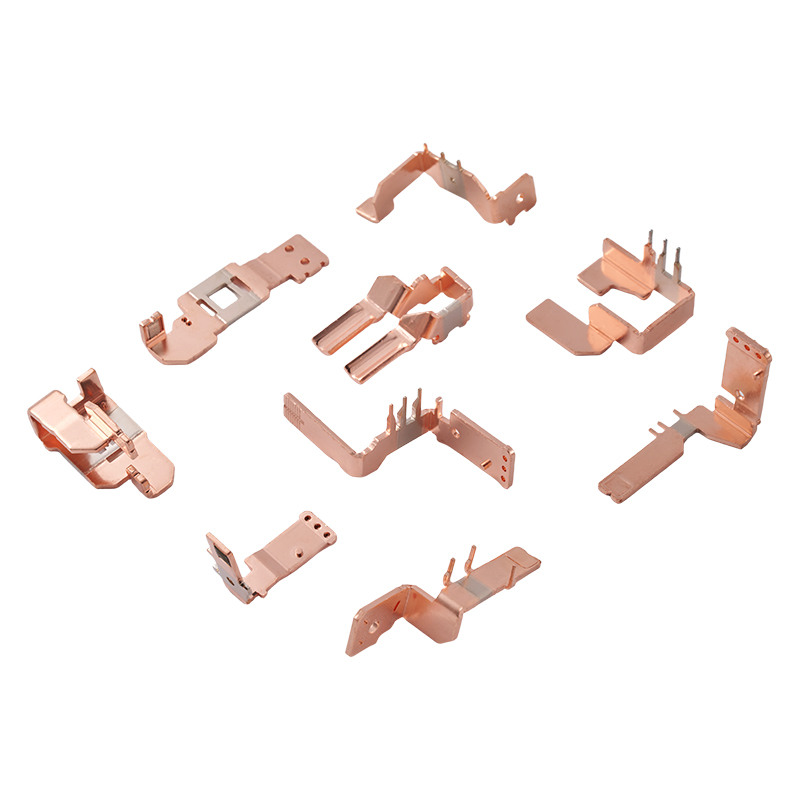
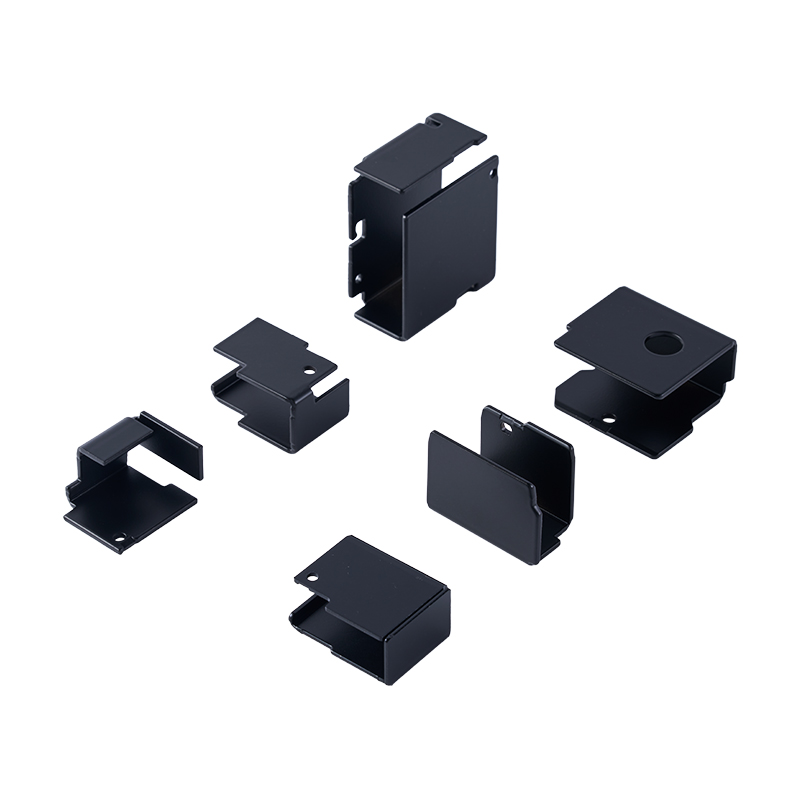
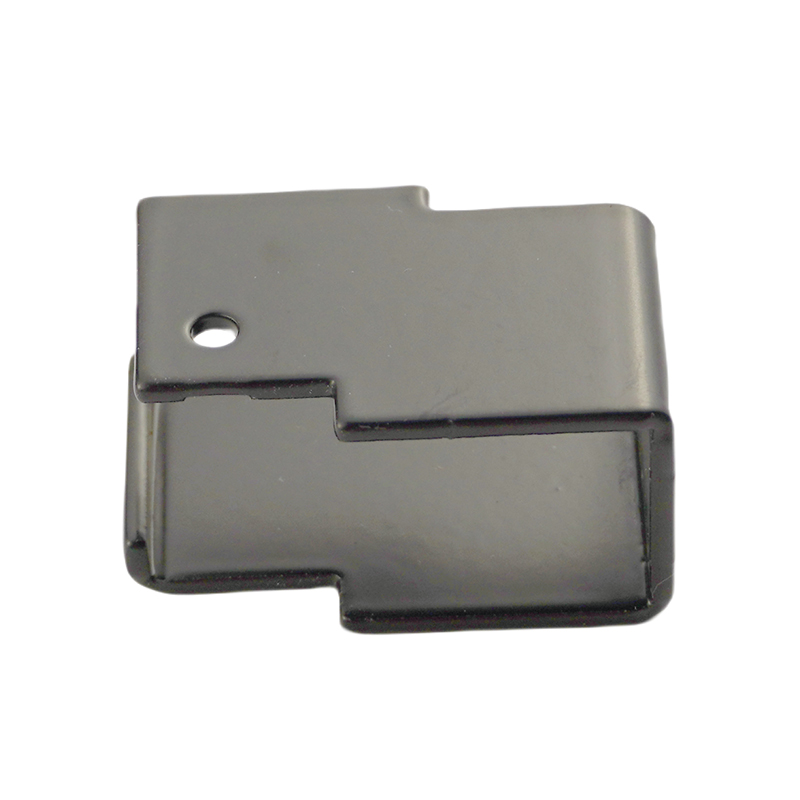
Smart meter manufacturers may also require copper terminals, conductive brackets, busbar sections, connecting pieces, shielding parts, and other hardware supporting products. These components can be developed from engineering drawings, three-dimensional data, physical samples, or customer specifications.
Customization may include material selection, thickness, width, hole pattern, bend angle, surface finish, plating, welding location, packaging method, and inspection criteria. A supplier capable of producing several related parts can reduce the number of procurement interfaces and help maintain better compatibility between components.
General-purpose stamped metal parts may appear similar to smart meter components, but they often do not provide the electrical, mechanical, or consistency requirements needed for precision metering. Smart Meter Components are developed around specific performance targets rather than being treated as simple shapes cut from sheet material.
Current-sensing parts must maintain a controlled resistance value. Conductive contact parts must provide low and stable resistance during operation. The material, geometry, welding process, and surface treatment all influence these results. Specialized component production allows these factors to be evaluated together rather than separately.
Compared with ordinary conductive pieces, precision manganin shunts provide more predictable resistance and better temperature stability. Compared with basic stamped contacts, engineered relay contact strips can provide more consistent pressure, improved arc resistance, and better performance over repeated switching cycles.
Smart meters are commonly produced in large quantities, and assembly lines may use automated feeding, insertion, riveting, welding, or soldering. Components with inconsistent dimensions can cause misfeeds, assembly stoppages, poor alignment, and additional manual inspection.
Precision molds, controlled stamping parameters, automated production lines, and inspection reports help reduce dimensional variation. Consistent hole positions, bend angles, contact locations, and overall profiles make it easier for customers to maintain efficient automated assembly.
Relay components must continue operating after many switching cycles. The contact system must resist deformation, surface deterioration, and excessive electrical wear. Carefully controlled contact geometry and suitable materials help maintain reliable switching performance and reduce the risk of contact welding or intermittent conduction.
The expected service life depends on the electrical load, voltage, current, switching frequency, environmental conditions, and relay design. Component suppliers cannot determine relay life from the contact strip alone, but they can provide stable parts that support the customer’s validated relay performance.
Off-the-shelf parts may require compromises in layout or assembly. Customized components can be shaped to fit the customer’s circuit board, relay structure, meter housing, or production equipment. This may reduce the number of secondary operations and improve internal space utilization.
Customization also allows the component to be optimized for different current ratings, mounting methods, insulation distances, terminal directions, coating specifications, and packaging requirements. The result is a closer match between the component and the final meter platform.
Material selection is one of the most important steps in the development of smart meter components. The correct material must meet the required combination of conductivity, resistance, spring behavior, strength, thermal stability, weldability, corrosion resistance, and cost.
Manganin and related resistance alloys are selected for shunt components because they offer controlled resistivity and relatively stable performance over temperature. The final resistance depends on alloy composition, strip thickness, width, length, forming geometry, and connection method.
Material consistency is essential. Variations in alloy composition or thickness can affect the finished resistance value. For this reason, incoming material inspection and production traceability are important parts of a controlled manufacturing system.
Copper and copper-based alloys are widely used in terminals, conductive brackets, busbars, and contact structures. They provide good electrical conductivity and can be formed into complex shapes. The specific alloy may be selected according to the required strength, spring properties, conductivity, and resistance to softening at elevated temperature.
When copper parts are used in switching or connection areas, surface treatment may be needed to improve contact stability, corrosion resistance, solderability, or resistance to oxidation. Coating requirements can be customized according to the customer’s application and validation standard.
Relay contact areas may require special contact materials or coatings to withstand electrical arcing and repeated operation. The suitable solution depends on current type, voltage, load characteristics, switching frequency, and expected service life.
Surface finishing may also be applied to improve corrosion resistance or make the component compatible with soldering, riveting, welding, or automated insertion. Coating thickness and coverage should be controlled because excessive or insufficient coating can affect both performance and cost.
In some sensing and metering products, epoxy resin encapsulation is used to protect internal structures from moisture, contamination, vibration, and mechanical damage. Flame-retardant housings and insulating materials can improve safety and long-term operating reliability.
Encapsulation design must account for thermal expansion, electrical insulation, dimensional requirements, and access to terminals. Proper curing and process control are necessary to avoid voids, cracks, incomplete filling, or stress on sensitive components.
Vacuum electron beam welding is an important process for joining dissimilar or precision conductive materials in applications where joint quality is critical. The process uses a focused electron beam in a vacuum environment to generate concentrated heat at the welding location.
Compared with conventional high-heat welding methods, electron beam welding can provide a narrow heat-affected zone and precise energy input. This is useful for shunt assemblies and other components where excessive heat could alter resistance, distort the material, damage a coating, or affect the mechanical properties of the part.
A shunt assembly may combine a resistance alloy section with conductive terminals. The joint must provide reliable electrical conduction while maintaining the intended resistance path. Inconsistent welding can introduce additional resistance, create local heating, or cause mechanical weakness.
Controlled vacuum electron beam welding supports accurate joining and can help maintain the electrical and dimensional characteristics of the assembly. The process is especially useful when the customer requires clean welds, controlled penetration, limited deformation, and repeatable joint performance.
Welding quality depends on beam power, focus, travel speed, vacuum level, clamping, material condition, joint design, and post-weld inspection. Production parameters must be established and monitored for each component structure.
Inspection may include visual examination, dimensional checks, resistance testing, pull testing, metallurgical evaluation, and other customer-specific requirements. By combining controlled welding with automated handling and documented inspection, the supplier can improve batch consistency.
Precision stamping is the primary forming process for many smart meter components. It enables efficient production of thin metal parts with accurate profiles, holes, bends, embossments, and contact features. When the tooling is correctly designed, stamping can provide high repeatability and a favorable cost structure for medium- and high-volume orders.
The mold or die determines much of the final component quality. Tooling must account for material thickness, tensile strength, springback, cutting clearance, forming sequence, burr control, and expected production volume.
Advanced mold and tooling design helps produce complex components in a controlled sequence. Features such as pilot holes, mounting slots, contact tabs, spring arms, and forming bends can be integrated into the tool. Proper tool maintenance is also important because wear can gradually change dimensions or increase burrs.
Progressive stamping can perform multiple operations as the material moves through a series of stations. Cutting, piercing, bending, forming, coining, and other operations may be completed within one continuous production process.
This method improves productivity and can reduce handling between operations. It is particularly suitable for relay strips, terminals, contact springs, and other parts requiring multiple repeated features. Automated feeding and collection further reduce manual variation.
Critical dimensions may include overall length, width, thickness, hole diameter, hole position, bend angle, contact height, spring arm position, and flatness. Not every dimension has the same functional importance, so inspection plans should identify critical-to-function features.
In-process checks help detect changes before large quantities are produced. Final inspection reports can include dimensional results, material information, surface condition, resistance data, and other agreed criteria. This documentation supports customer quality control and incoming inspection.
Fully automated production lines can improve speed, consistency, and traceability. Automated systems may handle material feeding, stamping, transfer, welding, testing, sorting, counting, and packaging. They also reduce the risk of handling damage and human error.
Automation is particularly valuable for smart meter components because customers often require large quantities of identical parts. Stable automation enables the supplier to support recurring orders while maintaining a consistent process window.
Smart meter components operate inside products expected to function continuously for many years. Quality management must therefore cover the entire product life cycle, from material purchasing and tooling design to production, inspection, packaging, and technical support.
Zhejiang Taoyang Electronics Co., Ltd. has obtained ISO 9001, ISO 45001, ISO 14001, and IATF 16949 certifications. These certifications reflect structured approaches to quality management, occupational health and safety, environmental management, and automotive-related quality requirements.
Although smart metering and automotive applications have different technical specifications, experience with IATF 16949 supports disciplined process control, traceability, risk evaluation, corrective action, and continuous improvement. These practices are valuable for electrical and electronic component production as well.
Material inspection may cover chemical composition, thickness, width, hardness, tensile characteristics, conductivity, surface condition, and supplier documentation. For resistance alloys, resistivity and temperature-related behavior may be especially important. For copper alloys, conductivity and mechanical properties may be evaluated according to the product specification.
Material identification and batch traceability help ensure that the correct material is used throughout production. If a problem occurs, traceability enables the affected batch and process conditions to be investigated more efficiently.
In-process inspection can identify tool wear, dimensional drift, burrs, surface damage, welding irregularities, and forming problems. The inspection frequency depends on the component, production volume, risk level, and customer requirements.
Using inspection data to monitor production trends can help prevent defects rather than simply detecting them after completion. This approach is particularly useful for high-volume products where a small process change could affect many parts.
Final inspection may include appearance, dimensions, resistance, electrical continuity, contact force, spring characteristics, weld quality, coating condition, and packaging verification. Complete inspection reports provide customers with evidence that the shipment conforms to the agreed specification.
Where required, samples can be submitted for customer approval before mass production. Engineering teams can also support design verification, trial production, process optimization, and corrective action if the customer identifies an issue during assembly or testing.
Smart metering products are commonly supplied to international markets with environmental and material compliance requirements. Taoyang’s products have passed authoritative tests including RoHS and REACH. Compliance documentation can help customers complete their own product declarations and market-entry procedures.
Smart meter manufacturers often develop different platforms for residential, commercial, industrial, prepaid, DIN rail, and utility applications. These platforms may use different current ratings, relay structures, circuit boards, housings, terminal arrangements, and assembly processes. A flexible component supplier can respond to these differences through engineering customization.
Customers may require a package containing shunt strips, relay contacts, springs, terminals, magnetic sensing parts, and other hardware. Supplying these related items through one coordinated source can simplify purchasing and reduce compatibility risks.
Material composition, resistance value, conductivity, current capacity, spring force, contact behavior, and temperature characteristics can be adjusted according to the application. The specification should define the required performance, test method, operating conditions, and acceptable tolerance.
Components can be developed with customer-specific lengths, widths, thicknesses, mounting holes, bend angles, terminals, contact positions, and forming structures. Drawings or physical samples can be used as the basis for engineering review.
Surface finishing may be selected to meet requirements for corrosion resistance, contact performance, solderability, weldability, appearance, or compatibility with the customer’s assembly method. Coating coverage and thickness can be controlled as part of the quality plan.
OEM manufacturing is available for customers who already have a defined design and need a qualified production source. ODM support is suitable for customers who require assistance with structure, material selection, tooling, prototype development, and production optimization.
Sample orders can be produced according to drawings or physical samples before mass production. This allows the customer to evaluate fit, electrical performance, assembly behavior, and compatibility with the complete meter design.
Packaging can be designed according to the customer’s warehouse, feeding, and assembly requirements. Options may include counted quantities, trays, reels, bags, protective separators, labeled cartons, moisture protection, and batch identification. Suitable packaging reduces deformation, contamination, mixing, and handling damage.
| Application | Typical Component Functions | Key Requirements |
| Smart electricity meters | Current sampling, relay switching, terminals, contact springs | Measurement accuracy, long service life, dimensional consistency |
| Digital power meters | Shunts, conductive parts, magnetic sensing components | Stable resistance, reliable signal transmission, compact design |
| DIN rail energy meters | PCB-mounted sensing parts, relay contacts, connection hardware | Easy automated assembly, controlled insulation, space efficiency |
| Utility metering systems | Current measurement and switching assemblies | High reliability, traceability, batch consistency |
| Industrial power monitoring equipment | Conductive terminals, shunts, sensor components | Stable operation under demanding electrical conditions |
| Smart grid infrastructure | Measurement and control hardware | Long-term reliability, customization, compliance support |
| Energy storage and new energy equipment | Current sensing, busbar connections, conductive stamped parts | Low resistance, thermal stability, high-current capability |
Residential meters require compact, cost-effective, and reliable components suitable for large-scale deployment. Shunts, relay contact strips, springs, and terminals must fit within standardized meter structures while supporting dependable measurement and remote control.
Commercial and industrial applications may involve higher current levels, more demanding operating cycles, or additional monitoring functions. Component designs can be adapted for different current paths, mechanical structures, and sensor arrangements.
DIN rail meters are designed for compact installation in distribution boxes, control cabinets, and energy management systems. PCB-mountable magnetic components, compact terminals, and precisely formed contacts help support efficient automated assembly.
Smart grid infrastructure depends on accurate and connected measurement equipment. Meter components contribute to the reliability of devices used for energy data collection, load management, remote switching, and network-level monitoring.
The quality of internal components has a direct effect on the performance of the complete meter. A stable shunt supports accurate current measurement. A reliable contact assembly improves remote switching. A consistent spring maintains contact pressure. A well-designed terminal reduces connection resistance and heating. A correctly positioned magnetic core improves signal linearity.
These effects also influence the manufacturer’s production efficiency. Components that arrive in consistent batches are easier to feed, assemble, test, and package. Reduced variation can lower rework, minimize line stoppages, and improve the yield rate of the finished meter.
Using a supplier with multiple process capabilities can provide additional benefits. Instead of coordinating separate suppliers for stamping, welding, surface finishing, and packaging, the customer can obtain a more integrated solution. This can simplify technical communication, shorten problem-solving cycles, and improve responsibility clarity when a design change is introduced.

Zhejiang Taoyang Electronics Co., Ltd. was founded in 2010 and specializes in hardware supporting products and solutions for electronic and electrical products, relays, current transformers, electricity meters, new energy, energy storage, and automotive applications. This industry coverage provides experience with the common requirements of conductive, sensing, switching, and structural components.
The company operates self-built automated production lines and has capabilities in mold and tooling design, precision stamping, vacuum electron beam welding, assembly, inspection, and technical support. These capabilities are important because smart meter components often require more than one process to achieve the required electrical and mechanical performance.
Engineering support begins with reviewing the customer’s drawing, sample, or performance target. The team can evaluate material feasibility, forming direction, weld location, tolerances, assembly method, surface treatment, and production volume. Early review helps identify potential manufacturing risks before tooling investment.
Automated production lines provide the capacity needed for recurring and high-volume orders. Controlled processes support stable output while reducing dependence on manual operations. Production scheduling and material planning can be organized around customer forecasts and agreed delivery requirements.
Process control includes documented operating parameters, tool maintenance, inspection standards, batch management, and corrective action. This approach helps ensure that a component manufactured during a later order remains compatible with the original approved sample.
Full-cycle technical support can cover design review, sample production, testing, tooling modification, trial assembly, mass production, inspection documentation, packaging, and after-sales response. This support is valuable when a customer is developing a new meter or transferring production to a new component supplier.
The company provides products and system solutions to leading customers in China and overseas. Its experience with export-oriented requirements supports communication related to drawings, specifications, inspection reports, packaging, compliance documents, and delivery arrangements.
The standard minimum order quantity for Smart Meter Components is 100 pieces, although the final quantity may depend on the component structure, tooling requirements, material, and customization level. Stock samples are available for evaluation, and OEM or ODM samples can be produced according to drawings or physical samples.
| Item | Details |
| Minimum order quantity | 100 pieces |
| Regular lead time | Approximately 6–8 weeks |
| Custom product lead time | Approximately 5–9 weeks after receipt of payment, subject to project confirmation |
| Regular order payment | 100% T/T; sample orders require full payment |
| Bulk order payment | 50% T/T advance payment and balance before delivery |
| Trade terms | EXW or CIF |
| Sample availability | Stock samples and customized OEM/ODM samples |
| Packaging | Standard or customized packaging |
Lead time depends on the product type, material availability, tooling condition, surface treatment, sample approval, and production schedule. Customers should provide drawings, estimated annual demand, target application, performance requirements, and preferred delivery schedule as early as possible.
For new projects, a typical process includes technical inquiry, drawing or sample review, quotation, design confirmation, prototype or sample development, customer testing, tooling completion, trial production, approval, and mass production. Clear communication at each stage helps reduce delays and avoids changes after tooling has been completed.
To develop the correct component efficiently, customers should provide as much technical information as possible. This may include the following:
For current transformer or magnetic sensing components, customers may also need to define rated primary current, maximum current, secondary output, AC accuracy class, DC error, mounting configuration, and circuit interface. The following representative specifications illustrate the type of information that may be used during product selection and development.
| Type | Rated Primary Current | Maximum Current | Secondary Current | AC Accuracy Class | DC Error |
| P-07 | 5 A | 20/40/60/80/100 A | 2/2.5/5 mA | 0.1/0.2 | 1.0/2.0 |
| P-07 | 10 A | 40/60/80/100/120 A | 4/5/10 mA | 0.1/0.2 | 1.0/2.0 |
| P-07 | 15 A | 60/80/100/120 A | 6/7.5/15 mA | 0.1/0.2 | 1.0/2.0 |
| P-07 | 20 A | 80/100/120 A | 8/10/20 mA | 0.1/0.2 | 1.0/2.0 |
These values are representative product options and should not replace project-specific confirmation. The final electrical characteristics must be established according to the customer’s complete meter design, applicable standards, test conditions, and approved technical specification.
Even a high-quality component must be installed correctly to achieve its intended performance. Shunt components should be connected according to the specified current path and welding or fastening method. Excessive heat during assembly can change resistance or damage nearby materials.
Relay contact strips should be aligned so that the moving and stationary contact surfaces meet evenly. Contact pressure, travel distance, and opening gap should be checked during relay assembly. Improper alignment may lead to localized heating, unstable conduction, or accelerated contact wear.
Contact springs should not be overstressed during insertion. The spring force and working displacement should remain within the approved design range. If the component is used in a high-vibration environment, the assembly should also be evaluated for retention and fatigue resistance.
Magnetic sensing components should be mounted in the specified orientation and position. Nearby magnetic materials, high-current conductors, and mechanical structures may influence measurement behavior. The final meter should be calibrated and validated using the complete assembly rather than relying only on individual component data.
Packaging and storage also matter. Components should be protected from moisture, contamination, impact, and excessive deformation. Plated or precision contact surfaces should not be exposed to unnecessary handling or abrasive materials. Proper inventory rotation and batch identification help preserve traceability.
Electrical and electronic manufacturers increasingly evaluate not only product performance but also the environmental impact of their supply chains. Responsible production includes material compliance, waste reduction, energy management, process efficiency, safe working conditions, and proper handling of industrial materials.
ISO 14001 certification supports a structured environmental management approach. RoHS and REACH compliance helps customers address restrictions on hazardous substances and chemical registration requirements. Automated production can also reduce material waste by improving process stability and minimizing defective parts.
Efficient tooling design contributes to sustainability by reducing scrap and extending tool life. Process optimization can lower the number of rework operations and improve material utilization. Durable components also support sustainability because longer-lasting meters require fewer replacements and reduce maintenance-related resource consumption.
Choosing a specialized supplier for smart meter components can reduce technical and commercial risk. The supplier understands that a shunt is not merely a metal strip, a relay contact is not merely a stamped tab, and a spring is not merely a bent piece of material. Each part must function within an electrical, mechanical, thermal, and manufacturing system.
A specialized partner can help the customer select appropriate materials, identify critical dimensions, develop tooling, control welding, manage surface treatment, prepare samples, and establish inspection methods. This integrated support is particularly valuable for customers launching a new meter, updating an existing design, or expanding into new energy and energy storage applications.
Compared with suppliers that focus only on low-cost stamping, an integrated manufacturer can offer stronger control over welding, tooling, automation, quality documentation, and customization. Compared with general electrical component distributors, a direct manufacturing partner can respond more quickly to design changes and production-specific requirements.
The combination of precision manufacturing, automated production, technical support, and quality system management gives customers a more dependable supply foundation. It can also support long-term cooperation as the customer introduces new meter models or modifies existing products for different markets.
Smart Meter Components are used inside smart electricity meters, digital power meters, DIN rail energy meters, utility metering systems, industrial power monitoring equipment, and smart grid infrastructure. Their functions include current sensing, circuit switching, signal transmission, electrical conduction, mechanical support, and connection between internal modules.
The product range includes manganin shunt strips, relay moving contact strips, relay stationary contact strips, precision contact springs, magnetic sensing components, conductive terminals, stamped copper parts, welded assemblies, and other customized conductive or structural components.
Manganin shunts provide stable resistance characteristics and low temperature drift. When current flows through the shunt, the resulting voltage drop can be measured by the meter’s electronic circuit. This supports accurate and repeatable current measurement when the shunt is correctly designed, manufactured, and calibrated within the complete meter system.
Yes. Customers can request customized component combinations, materials, electrical characteristics, dimensions, structural designs, surface coatings, finishes, packaging, and inspection requirements. OEM manufacturing can be based on engineering drawings, three-dimensional files, or physical samples.
Yes. Consistent dimensional accuracy, controlled forming, PCB-mountable designs, and automated production support automated assembly. The final design should be reviewed against the customer’s feeding, insertion, welding, soldering, riveting, and testing equipment.
Precision relay contact strips are designed to provide stable conductivity, controlled contact pressure, and good resistance to electrical arcing. Actual service life depends on the relay design, load, voltage, current, switching frequency, environmental conditions, and contact material. The component specification should therefore be validated in the complete relay and meter assembly.
Yes. Vacuum electron beam welding is available for suitable component structures, including precision conductive and shunt assemblies. It provides concentrated heat input, a narrow heat-affected zone, controlled penetration, and reduced distortion when the process is properly configured.
The supplier has obtained ISO 9001, ISO 45001, ISO 14001, and IATF 16949 certifications. Its products have also passed authoritative tests including RoHS and REACH requirements.
Stock samples are available for evaluation. OEM and ODM samples can also be developed according to customer drawings or physical samples. Sample approval allows the customer to check fit, dimensions, electrical performance, assembly behavior, and packaging before mass production.
An inquiry should include the application, drawing or sample, material requirements, current rating, resistance target, contact load, switching life, dimensions, surface treatment, annual demand, packaging requirements, inspection standards, and expected delivery schedule. More complete information enables faster technical evaluation and more accurate quotation.
The standard minimum order quantity is 100 pieces. Regular orders generally require 100% T/T, while bulk orders may use a 50% T/T advance payment with the balance paid before delivery. Trade terms include EXW or CIF. Regular lead time is approximately 6–8 weeks, while custom products generally require approximately 5–9 weeks after receipt of payment, subject to project confirmation.
Yes. Packaging can be customized according to the customer’s storage, transportation, feeding, labeling, and assembly requirements. The packaging plan may include counted quantities, trays, protective separators, bags, reels, cartons, moisture protection, and batch identification.
Smart Meter Components are essential to the accuracy, switching reliability, electrical safety, and production efficiency of modern energy measurement equipment. Manganin shunt strips support precise current sampling. Relay moving and stationary contact strips provide dependable circuit switching. Precision contact springs maintain stable pressure. Magnetic sensing components support signal transmission and measurement linearity. Conductive terminals and stamped hardware ensure secure electrical and mechanical connections.
The most important advantages of a specialized component solution are stable electrical performance, consistent dimensions, controlled materials, reliable welding, precision stamping, long switching capability, customization flexibility, and documented quality. These advantages help meter manufacturers reduce assembly problems, improve product consistency, and support long-term field reliability.
Zhejiang Taoyang Electronics Co., Ltd. combines automated production lines, mold and tooling development, vacuum electron beam welding, precision stamping, quality system management, compliance support, and full-cycle technical service. This integrated manufacturing capability enables the supply of customized components for smart metering and related electrical applications.
For customers developing new smart electricity meters, upgrading existing designs, or sourcing reliable hardware for digital power and energy management equipment, a carefully engineered component partnership can provide measurable value. By starting with a clear technical specification and working through sample approval, process validation, and controlled mass production, manufacturers can obtain components that support accurate measurement, dependable switching, efficient assembly, and stable product quality.

1. International Organization for Standardization. ISO 9001 Quality Management Systems: Requirements.
2. International Organization for Standardization. ISO 14001 Environmental Management Systems: Requirements with Guidance for Use.
3. International Organization for Standardization. ISO 45001 Occupational Health and Safety Management Systems: Requirements with Guidance for Use.
4. International Automotive Task Force. IATF 16949 Quality Management System Requirements for Automotive Production and Relevant Service Parts Organizations.
5. International Electrotechnical Commission. Standards and technical guidance for electricity metering equipment and measuring systems.
6. International Electrotechnical Commission. Standards and technical guidance for low-voltage switching and control equipment.
7. Restriction of Hazardous Substances Directive. Requirements concerning restricted substances in electrical and electronic equipment.
8. Registration, Evaluation, Authorisation and Restriction of Chemicals. Requirements for chemical substance management in products and supply chains.
9. Materials and manufacturing information supplied for customized shunt strips, relay contact strips, precision springs, magnetic sensing components, and stamped electrical hardware.





 English
 русский
 Français
 日本語
 Español
 Deutsch
 عربى
 Indonesia
 +86-18257772883